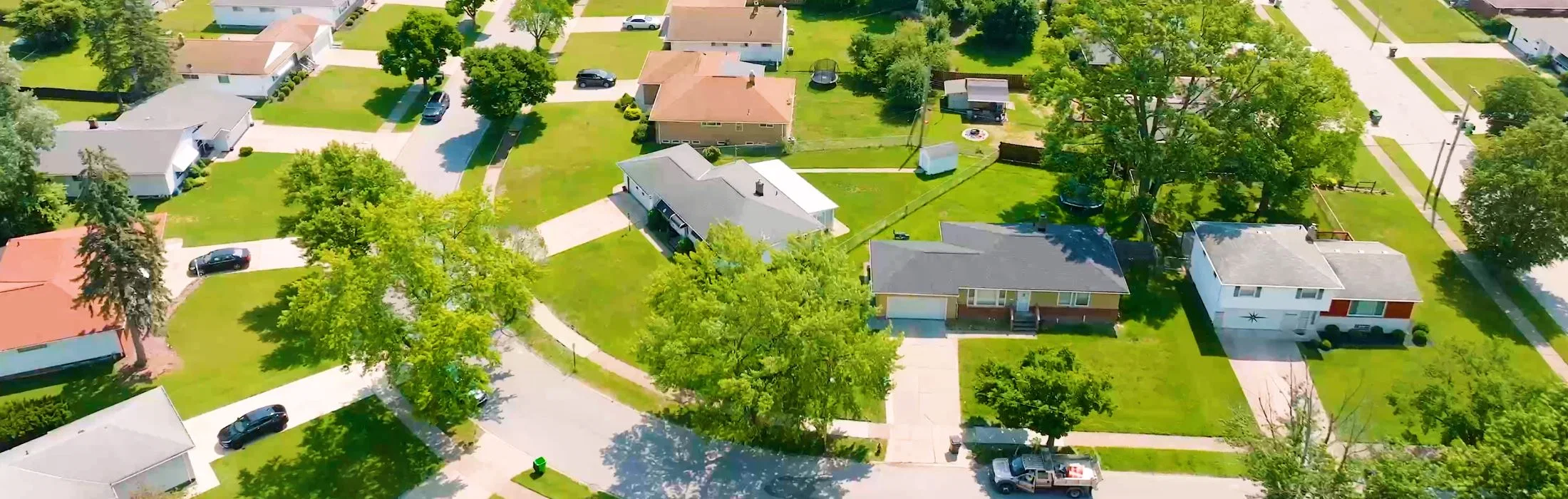
Warrensville Heights is not a show-site city. It is a residential and light-commercial inner-ring suburb on Cleveland's southeast side, bounded by Shaker Heights and University Circle, Cleveland to the north and Solon and the outer suburbs to the south, and its trade show business is almost entirely about people who live or work there commuting into Downtown Cleveland for the actual event.
Trade Show Services of Cleveland treats Warrensville Heights as a staging and residential base within the broader Cleveland market rather than an independent venue territory. Crews and account teams working a Warrensville Heights address travel I-480 or Harvard Avenue into downtown, or up Richmond Road and Chagrin Boulevard toward University Circle, Cleveland, both paths under thirty minutes outside of rush hour.
What this page covers is honest about that reality: what a Warrensville Heights-based exhibitor or sponsor actually needs is fast access to the Huntington Convention Center, Rocket Arena, and Progressive Field downtown, plus the University Circle, Cleveland museum corridor for smaller branded events, coordinated through a single Cleveland account team rather than a local office.
Warrensville Heights, OH execution priorities
- Fast I-480 and I-271 routing to downtown venues
- Warehouse receiving coordinated from the Cleveland core
- Install crews dispatched from the same base each show
- University Circle, Cleveland options for smaller branded events
- Single point of contact regardless of show location
A residential base, not a show-site city
Warrensville Heights has no convention center, arena, or hotel-and-exhibit hall complex of its own, and it is not trying to be a show-site city. It is a working residential suburb of roughly thirteen thousand people, home to a mix of single-family neighborhoods, small retail plazas along Northfield Road and Harvard Avenue, and light industrial and office parks near the I-480 corridor. Trade show activity connected to Warrensville Heights is almost always about a company or exhibitor who lives, works, or warehouses locally and needs to get product and people into a downtown or University Circle, Cleveland venue.
That reality shapes how we staff a Warrensville Heights-linked job. Instead of maintaining a separate crew or a separate warehouse footprint for the suburb, we run it as part of the same Cleveland-market rotation that covers Shaker Heights, Beachwood, and the east side generally, which means faster mobilization and a single schedule to manage rather than a second logistics chain.
Routing into Downtown Cleveland
The two practical paths from Warrensville Heights into the convention core are I-480 west to I-77 or I-90 north, and Harvard Avenue or Broadway Avenue directly into the near-southeast side. Both put crews and freight at the Huntington Convention Center or Rocket Arena in twenty-five to thirty-five minutes under normal traffic, with the I-480 paths holding up better during evening rush because it avoids the surface-street signal timing on Broadway.
For exhibitors staying near Warrensville Heights during a multi-day show, we build the move-in schedule around that drive time rather than assuming a downtown hotel stay, which keeps labor costs down without adding real risk to the installation timeline.
University Circle, Cleveland as the nearer alternative
Chagrin Boulevard and Richmond Road connect Warrensville Heights to University Circle, Cleveland in under fifteen minutes, which makes the Cleveland Museum of Art and Cleveland Museum of Natural History realistic venues for a Warrensville Heights-adjacent sponsor running a smaller branded activation, donor event, or product reveal rather than a full trade show floor. Both museums book private and semi-private events around their public hours, and we coordinate load-in through their service entrances rather than the public galleries.
This corridor is worth knowing about specifically because it is closer to Warrensville Heights than downtown is, and for the right event size it can cut both drive time and labor hours compared with routing everything to the convention center.
Warehouse and drayage coordination
There is no advance-freight warehouse in Warrensville Heights itself. Shipments for Warrensville Heights-connected exhibitors are received at our Cleveland-area coordination point, tracked against the show's material handling deadlines, and delivered to the venue floor on the scheduled date, whether that venue is downtown or in University Circle, Cleveland.
We flag this early with clients so nobody assumes local receiving is available, and so freight timing gets designed around actual drive distances rather than an address on paper.
Labor and crew staging
Install and dismantle labor working a Warrensville Heights-linked show comes from the same crew pool covering the rest of the Cleveland market, dispatched to whichever venue the show is booked at. Because Warrensville Heights sits roughly equidistant between downtown and University Circle, Cleveland, it functions well as a lodging base for crews working either corridor, which is a detail we use when a job runs multiple days and hotel cost matters.
Event types that make sense here
Given the lack of a local venue, the realistic Warrensville Heights-connected jobs are corporate exhibitors headquartered or warehousing nearby who need booth fabrication and drayage support routed downtown, association members commuting into a convention center show, and sponsors running a University Circle, Cleveland museum event who happen to be based on the southeast side. We do not position Warrensville Heights as a destination for out-of-town exhibitors.
Hotel and lodging reality
Warrensville Heights has limited hotel inventory of its own, so traveling crews and exhibitor staff working a show connected to this suburb typically stay downtown near the convention center or in University Circle, Cleveland near the museum corridor, both a short drive away. We factor lodging choice into the labor schedule so shifts start on time regardless of where the crew is sleeping.
Lead time and scheduling
Because every Warrensville Heights-connected job ultimately delivers to a downtown or University Circle, Cleveland venue, our lead-time planning matches whatever that venue requires, not a separate local timeline. We recommend engaging four to six weeks ahead for standard convention center exhibits and eight or more weeks for a custom University Circle, Cleveland activation that needs museum sign-off on load-in logistics.
Working with a Cleveland-market account team
Clients based in or near Warrensville Heights get one account manager and one production schedule covering fabrication, graphics, drayage, and on-site labor, whether the destination is Rocket Arena, the Huntington Convention Center, or a University Circle, Cleveland museum. That single point of contact is the practical benefit of routing a residential suburb through the broader Cleveland operation instead of treating it as its own market.
Trade show work in Warrensville Heights, OH
Warrensville Heights, OH is one of the Cleveland area submarkets we cover for trade show work.
Warrensville Heights, OH sits in the East suburbs area.
Projects in Warrensville Heights, OH get scoped the same way as work in the Cleveland core: venue, dates, footprint, and budget frame first, then the build plan. The difference is usually in freight routing and which nearby buildings are the closest fit.
Cleveland as a trade show city
Exhibiting in Cleveland means working inside an established event ecosystem. The venues, the labor model, and the local production capacity all behave in predictable patterns.
Trade show weeks in Cleveland compress decisions. Dock windows are finite, rigging slots fill fast, and the labor calendar around a citywide conference runs hot. Exhibitors who treat planning as optional lose time they don't get back.
The Huntington Convention Center campus publicly markets more than 520,000 square feet of meeting and event space, including 225,000 square feet of exhibit hall space, two ballrooms, and 50-plus breakout rooms — a useful reference point when sizing a project.
it is connected to the 600-room Hilton Cleveland Downtown and Cleveland Public Auditorium, giving downtown programs a genuine campus-style event core rather than a single isolated building.
Where Cleveland shows actually happen
Every Cleveland show takes place in a specific building with its own rules. The venues below are common planning anchors across the local event calendar.
A venue walk — either in person or via the published floor plan — is the step that reveals constraints no spec sheet shows. Column spacing, real ceiling height at the grid point, and dock access shape what's actually buildable.
Rock & Roll Hall of Fame: it can host events for 20 to 2,000 people on its host-an-event section.
Who handles what during the Cleveland install window
There is no single labor model for Cleveland trade shows. The right approach depends on the specific venue and the show organizer's contracts.
On most Cleveland shows, the labor plan takes one call with the venue's exhibitor services desk, one review of the current manual, and one email to the general contractor. Skipping any of those three is usually where problems start.
At Huntington Convention Center of Cleveland, full-time employees of the exhibiting company or show management may set up computers, which is a narrow but important exception to more general labor assumptions.
Cleveland labor requirements vary by venue, organizer, and current exhibitor manual. At the Huntington Convention Center, certain union jurisdictions may apply depending on the event.
Scope in Warrensville Heights, OH Cleveland, OH
A full engagement covers scope development, fabrication or rental, graphics, show services, logistics, and on-site execution from move-in through dismantle.
What shows up in most budgets: structure, graphics, AV, show-service orders through the venue, labor, freight, supervision days, and closeout. Individual projects layer or remove items based on scope.
A well-run project has few surprises on install day because the handoffs upstream were tight. A bad one has many, because they weren't.
Multi-show programs add asset management: storage, refurbishment, graphic swaps, and scheduled re-kitting so the booth rolls cleanly from Cleveland to the next city on the calendar.
Out of scope by default are show organizer fees, booth lease costs paid directly to the show, staff travel and per diems, and any custom software or data-capture tooling the client runs on its own stack. Those stay on the client side and plug into the project through coordination, not rebilling.
From first call to strike
Every engagement begins the same way. The venue, the show dates, the footprint, and the target outcome go on the table first. From those four inputs, a real plan can be built.
Venue coordination comes next. That means pulling the current exhibitor manual, confirming dock and freight windows, submitting rigging approvals where needed, and placing utility orders against the building's published specs.
Production brings the plan into physical form: fabrication, graphics, AV, rentals, and the named lead who will run the floor.
Install days are owned by a single show floor lead. That person carries the plan, works the punch list in real time, and reports up once a day with real status.
During show hours, the booth functions as a live operating space. A booth supervisor manages repairs, sponsor requests, lead-capture issues, and any venue questions so client staff can focus on conversations.
Closeout is tight: strike, crate, manifest, storage designation, and a written post-show report delivered within a day. That document drives the next booking.
Cost and lead time
Pricing is driven by real line items: fabrication or rental, graphics, show services, labor, freight, and travel where it applies. Round numbers without that breakdown usually hide something.
Cost scales with how it is built, how big it is, what the venue charges for its own services, what the graphics look like, how far the crates travel, and how many days the team stays on-site.
Lead time drives everything. Custom: 16 to 20 weeks. Rental: 8 to 12. Under 4 weeks is possible but narrows choices and raises cost.
What a successful project looks like
A successful project in Cleveland looks like a booth that lands on time, passes venue inspection on the first walk, runs without incident through show hours, and ships out the same day it strikes.
Trade show ROI is measured at the lead and pipeline level. The show-floor execution either protects or undermines those numbers.
A week after the show, the booth's actual floor performance is already clearer than any pre-show projection. We document those observations alongside the technical closeout so the next cycle inherits real signal, not nostalgia.
Why Trade Show Services of Cleveland
Trade Show Services of Cleveland is built for exhibitors that need practical trade show execution, not a disconnected list of vendors. The work is planned from the venue outward so the schedule, floor rules, freight path, and support plan stay connected.
The difference shows up before the dock opens. A clear project owner can confirm what the building requires, what the show organizer controls, which tasks belong to house services, and which decisions need client approval before the schedule gets tight.
Repeat programs benefit when the plan captures what happened on the floor: what arrived late, what drew traffic, what took too long to assemble, and what should change before the next show.
Questions about Warrensville Heights, OH
Does Trade Show Services of Cleveland have a location in Warrensville Heights itself?
No. We operate out of the Cleveland core and treat Warrensville Heights as a residential and commuting base within that market. Crews, drivers, and account managers based near Warrensville Heights travel to whichever downtown or University Circle, Cleveland venue a show is actually booked at.
Which venues does a Warrensville Heights exhibitor typically end up at?
Most Cleveland-area trade shows for teams based near Warrensville Heights run through the Huntington Convention Center of Cleveland or Rocket Arena downtown. Smaller product launches or association gatherings sometimes book the Cleveland Museum of Art or Cleveland Museum of Natural History in University Circle, Cleveland, roughly fifteen minutes north.
How far is the drive from Warrensville Heights to Downtown Cleveland?
Under thirty minutes outside of rush hour via I-480 to I-77 or I-90, or via Harvard Avenue and Broadway. During evening rush the same trip can stretch to forty-five minutes, which our drayage schedule accounts for on move-in and move-out days.
Can freight be received or staged near Warrensville Heights before a show?
We can hold advance freight at a Cleveland-area warehouse and stage it for delivery to the show floor on your target date, but there is no dedicated receiving dock in Warrensville Heights itself. All advance shipments paths through our downtown-adjacent coordination point.
Do you build custom booths for exhibitors based in Warrensville Heights?
Yes. Fabrication, graphics, and rental booth work happen at our production side regardless of where the client company is headquartered, and Warrensville Heights-based teams get the same build, delivery, and installation service as any other Cleveland-market client.
Is Warrensville Heights a realistic base for a multi-day install crew?
It works well as a hotel and lodging base for crews working University Circle, Cleveland or east-side venues, since it sits within a short drive of both downtown and the museum corridor, giving traveling labor a central, less expensive place to stay between shifts.
Do you work at The Westin Cleveland Downtown?
Yes. the hotel offers 20,000 square feet of downtown event space. Projects at that building are planned against its specific floor rules.
How does labor work in Cleveland?
It runs venue by venue. At IATSE Local 27, it serves as a referral hall for many major theatres, arenas, and convention halls in Cleveland and specifically lists the Huntington Convention Center, Public Auditorium, and Rocket Arena among its venue and employer information. Other Cleveland venues have their own published rules, and the plan matches the specific building.
How much lead time is ideal?
Custom builds run best with 16 to 20 weeks of lead time. Rentals take 8 to 12 weeks. Work inside 4 weeks is possible but raises costs and narrows the options.
What information kicks off a project?
The show, the venue, the booth number, the dates, and a target budget range. From those, an initial scope and a realistic cost come back within a few days.
Who runs the booth on-site?
One named show-site lead runs the install, the show hours, and the strike. That person carries the floor plan and the punch list from crates to doors and reports up once a day.
Can the booth travel to the next city on our calendar?
Yes — builds are designed for modular reuse unless single-use scenic is specifically required. Same structure, swappable graphics, standard crates. Cleveland programs that roll to another city on the same calendar get handled end to end.
What happens if something breaks during show hours?
The show floor lead handles it. Minor repairs happen in place; anything larger gets sourced from the local fabricators or rerouted through the venue's service desk.