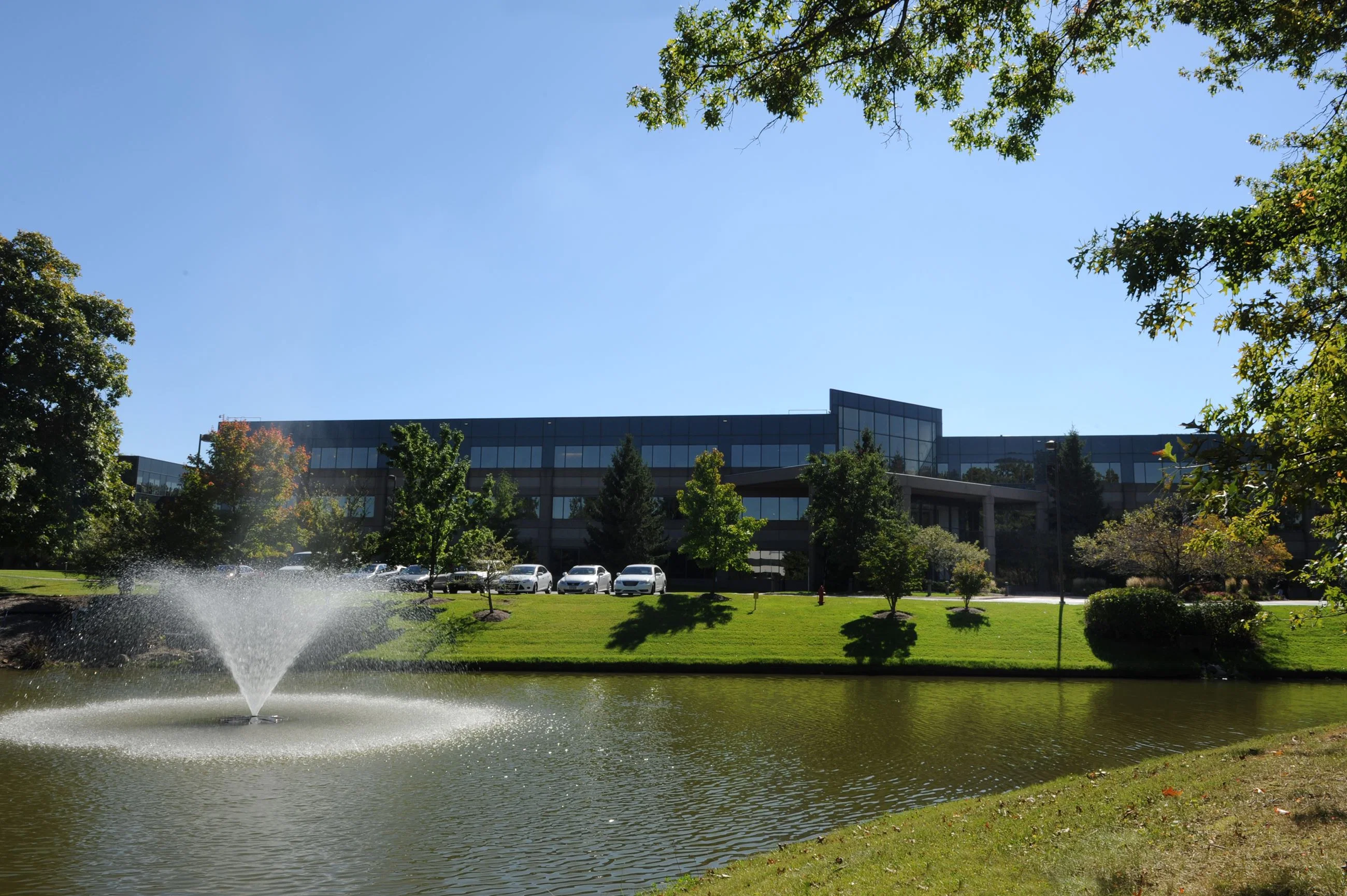
Mayfield Heights doesn't get talked about as much as Beachwood or University Circle, Cleveland, but its position on I-271 near Wilson Mills and Mayfield Road makes it one of the more practical staging points on the east side. Office parks, light-industrial buildings, and corporate back-office operations fill out the district, and several of our repeat clients here run logistics or sales operations that connect to trade show programs happening elsewhere in the metro rather than hosting the events themselves.
There's no exhibit hall or hotel ballroom of scale in Mayfield Heights, so when a Mayfield Heights company needs to exhibit at a trade show, the actual event lands downtown or occasionally at a suburban hotel property nearby, and we build the routing and material staging plan around the client's Mayfield Heights office as the starting point.
What Mayfield Heights does offer that some neighboring suburbs don't is warehouse and light-industrial space suited to material staging and pre-show assembly. A handful of our clients use Mayfield Heights facilities as a staging point for booth components before they move downtown, which keeps a bulky build off a downtown loading dock until the exact window it's needed.
Mayfield Heights, OH execution priorities
- I-271 corridor staging for east-side events
- Corporate office and light-industrial client support
- Pre-show assembly and material staging
- Downtown and suburban hotel venue coordination
- Freight routing between Mayfield Heights and downtown
A central staging position on I-271
Mayfield Heights sits almost exactly between Beachwood to the south and Euclid to the north along I-271 and I-90, which makes it a genuinely convenient midpoint for staging materials or crew before a job that spans multiple east-side stops in a single day. That geography matters more than it sounds, since a crew based downtown loses real time backtracking between two suburbs on opposite sides of the metro.
We use Mayfield Heights as a practical staging base for multi-location east-side work, keeping trucks and crew centrally positioned rather than running everything out of a single downtown yard when a job touches several suburbs, which shortens the total drive time across a multi-stop day and keeps fuel and labor costs more predictable for the client.
Corporate and office-park clients
The office parks along Mayfield Road and Wilson Mills house a mix of regional corporate offices, insurance and financial back-office operations, and light-manufacturing companies, several of which exhibit at industry-specific trade shows downtown or in other Ohio markets.
We work with these clients the same way we would any exhibitor, but the planning conversation often starts from a Mayfield Heights conference room rather than a downtown office, which shapes how we schedule site visits and material pickups.
Pre-show assembly and staging space
Several clients with warehouse or light-industrial space in Mayfield Heights use that facility as a staging point for booth assembly, packing, and quality checks before materials move to the actual show venue, which keeps that work off a downtown dock with its own tight scheduling windows. Doing the bulk of the assembly work here also means any structural or graphic issue gets caught and fixed before the truck ever leaves for downtown.
We coordinate directly with facility managers on these staging arrangements, timing the final move to the show venue so materials arrive exactly within the receiving dock's scheduled window rather than early or late, and confirming loading-dock dimensions and floor-load limits at the Mayfield Heights facility itself before committing to a build size.
Light-industrial and manufacturing exhibitors
A number of Mayfield Heights businesses are light-manufacturing or industrial-supply companies that exhibit at trade-specific shows requiring heavier equipment displays, working machinery demonstrations, or industrial-grade signage, a different build profile than a typical corporate booth, and one that usually involves closer coordination with show management on floor-load capacity and safety inspection.
We handle the specialized handling these exhibits need, coordinating equipment transport, on-site power requirements, and safety clearances that heavier industrial displays require beyond what a standard booth build involves, working with the client's own equipment handlers where the machinery itself needs specialized rigging we don't provide directly.
Freight routing to downtown venues
The drive from Mayfield Heights into Downtown Cleveland runs about twenty to twenty-five minutes via I-271 to the Innerbelt, a reliable paths outside of peak congestion windows that we plan crew and freight schedules around.
For larger loads, we sometimes stage out of a Mayfield Heights facility directly rather than a separate downtown yard, cutting out an extra transfer point when the client already has suitable warehouse space in the district.
Suburban hotel venues near Mayfield Heights
While the major hotel brands we work with most often sit downtown, several suburban hotel properties near Mayfield Heights and the I-271 corridor host smaller corporate meetings, regional sales conferences, and internal training events that still need professional staging and AV.
We handle these suburban hotel bookings with the same crew and equipment we'd use downtown, adjusted for the smaller meeting-room scale these properties typically offer compared to a full convention hotel.
Recurring client relationships
A meaningful share of our Mayfield Heights business comes from repeat corporate clients who exhibit at the same regional trade shows year after year, which lets us build institutional knowledge about their specific booth, branding, and logistics preferences over time rather than relearning the account from scratch each season.
We keep detailed build records for these recurring Mayfield Heights clients, so returning to the same show a second or third year moves faster than the first, with material lists and vendor contacts already established, and any lessons learned from a prior year's install carried forward into the next one.
Coordinating multi-stop east-side days
Because of its central position, Mayfield Heights sometimes serves as a coordination point for jobs that touch multiple east-side locations in a single day, a morning delivery in Euclid followed by an afternoon setup in Beachwood, for example.
We plan the day's routing to minimize backtracking, using Mayfield Heights as the anchor point between stops rather than running crews back to a single downtown base between each leg of a multi-location job.
Working with facilities and property managers
Mayfield Heights office parks and industrial buildings are professionally managed properties with their own rules on loading dock hours, after-hours access, and vehicle parking that differ building to building, and we coordinate directly with those property managers ahead of any staging or pickup work rather than assuming one building's rules apply to the next.
We treat that coordination as a standard part of the planning process for any Mayfield Heights job, confirming access windows and any building-specific requirements before scheduling crew time rather than assuming a standard commercial-loading arrangement applies, which avoids the kind of last-minute access denial that can derail an otherwise well-planned install day.
The Cleveland event landscape
Cleveland runs one of the busiest trade show calendars in the region. Convention weeks stack close together, hotel blocks compete for the same nights, and the venues themselves shape what is possible on the floor.
The attendees vary by show — some weeks draw regional operators, others pull international buyers in for a single conference — but the floor mechanics stay consistent. Every booth needs graphics production, show services, labor calls, and a plan for the specific building it's landing in.
Cleveland Hopkins International Airport reported more than 10 million annual passengers and 47 nonstop destinations, which materially supports exhibitor, crew, and attendee lift into the market — a useful reference point when sizing a project.
Destination Cleveland’s winter 2025 meetings update says Hotel Cleveland reopened after a $90 million renovation with 491 rooms and 59,000 square feet of modernized meeting space, while Fidelity Hotel opened within walking distance of the convention center, which sets the practical ceiling for a booth program working the market.
Citywide conventions and association meetings is one of the sectors that shapes the Cleveland calendar. The Huntington Convention Center campus is large enough to support genuine convention and expo logistics, and the connected Hilton plus nearby downtown hotel stock make Cleveland workable for citywide programs rather than only one-off ballroom events.
The buildings that host Cleveland events
Different Cleveland venues mean different floor plans, different labor rules, and different freight realities.
The right building depends on the show: a consumer expo wants open aisles and broad traffic flow; a corporate conference wants controlled breakout space; a brand activation wants a venue that can carry scenic and production without fighting the architecture.
Windows on the River. It has been hosting private events for more than 25 years.
John S. Knight Center is one of the anchors. The center offers 123,000 square feet of customizable space.
Huntington Convention Center of Cleveland: venue materials say the center provides over 520,000 square feet of meeting and event space.
How Cleveland floor operations work
Labor in Cleveland runs venue-by-venue, not citywide. Each building publishes its own rules for who handles what on the floor.
On most Cleveland shows, the labor plan takes one call with the venue's exhibitor services desk, one review of the current manual, and one email to the general contractor. Skipping any of those three is usually where problems start.
Huntington Convention Center of Cleveland — The convention center is a union facility and that certain union jurisdictions may apply based on the needs of the event.
Practical planning rules for Mayfield Heights, OH Cleveland, OH in Cleveland: Cleveland labor requirements vary by venue, organizer, and current exhibitor manual. At the Huntington Convention Center, certain union jurisdictions may apply depending on the event.
What's included in the project scope
Projects in Mayfield Heights, OH Cleveland, OH typically include design work, fabrication or rental sourcing, graphics production, show-service paperwork, freight, install, show-hours coverage, and strike.
Typical line items include booth structure (custom or rental), graphics and print, AV and lighting, show-service orders (power, internet, rigging), labor calls against the venue's rules, freight both ways, on-site supervision, and post-show closeout documentation.
A well-run project has few surprises on install day because the handoffs upstream were tight. A bad one has many, because they weren't.
For programs that repeat, asset management becomes part of the engagement — storage, graphic rotation, refurbishment, and re-crating are planned rather than one-off.
A clean scope definition also calls out what isn't included: show organizer fees, client staff travel, and anything the client already has under contract (lead capture platforms, CRM integrations, promotional giveaways). Those run alongside the engagement rather than inside it.
How a project runs
Every engagement begins the same way. The venue, the show dates, the footprint, and the target outcome go on the table first. From those four inputs, a real plan can be built.
After the brief, the work turns to the building itself. Dock windows, utility orders, rigging approvals, and labor calls are all confirmed in writing before anything goes to fabrication.
Production covers fabrication, graphics, AV spec, rentals, and crew chief assignment. It is the longest phase of most projects and the one where timelines are either protected or lost.
Install days are owned by a single show floor lead. That person carries the plan, works the punch list in real time, and reports up once a day with real status.
Throughout show hours, the show floor lead stays present. Tech breaks, sponsor changes, venue requests — all handled without pulling the client team off the floor.
Strike and closeout happen the same day. Storage labels, outbound manifests, vendor performance notes, and a written debrief go out within 24 hours of doors closing.
What it costs and how fast it moves
Every project has the same cost drivers. The number depends on scope, and scope depends on a handful of specific variables.
Six variables drive the cost: custom versus rental, booth footprint and complexity, venue-specific labor and rigging fees, graphics scope and substrate, freight distance and timing, and the number of on-site supervision days.
Lead time drives everything. Custom: 16 to 20 weeks. Rental: 8 to 12. Under 4 weeks is possible but narrows choices and raises cost.
Outcomes we optimize for
The measure of a good engagement is simple: on-time install, no venue callouts, clean show hours, and a closeout that makes the next event easier to book.
Most programs in Cleveland are evaluated on lead-capture volume, meetings booked on the floor, and qualified-pipeline attribution after the show. The booth is a means to those numbers — it is not the number itself.
A week after the show, the booth's actual floor performance is already clearer than any pre-show projection. We document those observations alongside the technical closeout so the next cycle inherits real signal, not nostalgia.
How we're built to run your project
Trade Show Services of Cleveland is built for exhibitors that need practical trade show execution, not a disconnected list of vendors. The work is planned from the venue outward so the schedule, floor rules, freight path, and support plan stay connected.
The value is coordination under pressure. If a graphics issue, freight delay, or venue question appears during install, the response has to be fast, documented, and connected to the actual show plan.
Consistency across show dates matters because many exhibitors reuse decisions, graphics, crates, and layouts across multiple venues. A documented plan helps the next event start from what was learned instead of starting over.
Trade show work in Mayfield Heights, OH
Mayfield Heights, OH is part of the Cleveland event market. Shows and meetings book here alongside the larger Cleveland calendar.
Mayfield Heights, OH sits in the East suburbs area.
Production for Mayfield Heights, OH shows starts with the same brief we run for the rest of Cleveland: venue specifics, show dates, footprint, outcome. Freight paths and local vendor availability are the variables that shift from the city core.
Questions about Mayfield Heights, OH
Does Mayfield Heights have its own trade show venue?
No. Mayfield Heights is an office and light-industrial district without an exhibit hall, so the actual show typically happens downtown or at a nearby suburban hotel, while Mayfield Heights often serves as a staging point for materials and crew.
Can you use a Mayfield Heights facility for pre-show assembly?
Yes. Several of our clients with warehouse or light-industrial space in Mayfield Heights use it for booth assembly and staging before materials move to the actual venue, which keeps that work off a downtown dock's tight schedule and catches issues before install day.
Do you handle heavier industrial or manufacturing exhibits from Mayfield Heights businesses?
Yes. We coordinate specialized equipment transport, power requirements, and safety clearances for light-manufacturing and industrial-supply exhibitors, which typically need a different build profile than a standard corporate booth.
How long is the drive from Mayfield Heights to Downtown Cleveland?
Around twenty to twenty-five minutes via I-271 to the Innerbelt outside of peak traffic, a reliable paths we build crew and freight schedules around, with realistic buffer added for morning rush-hour congestion on the Innerbelt approach.
Can you support events at suburban hotels near Mayfield Heights instead of downtown?
Yes. We handle regional sales conferences and training events at suburban hotel properties near the I-271 corridor, adjusting crew and equipment for the smaller meeting-room scale compared to a downtown convention hotel property.
Do you support jobs that touch multiple east-side suburbs in one day?
Yes. We often use Mayfield Heights as a central staging point for multi-stop days touching Euclid, Beachwood, or other east-side locations, planning routing to avoid unnecessary backtracking to a single downtown base and keeping crew scheduling realistic across the whole paths.
Do you work at Great Lakes Science Center?
Yes. Great Lakes Science Center maintains a corporate-events and private-rentals section. Projects at that building are planned against its specific floor rules.
How does labor work in Cleveland?
It runs venue by venue. Huntington Convention Center of Cleveland: Edlen Electric handles electrical and plumbing services on an exclusive basis, and the exhibitor services portal covers electrical, plumbing, air, water, internet, booth cleaning, catering, and rigging. Other Cleveland venues have their own published rules, and the plan matches the specific building.
How much lead time is ideal?
Custom builds run best with 16 to 20 weeks of lead time. Rentals take 8 to 12 weeks. Work inside 4 weeks is possible but raises costs and narrows the options.
What information kicks off a project?
The show, the venue, the booth number, the dates, and a target budget range. From those, an initial scope and a realistic cost come back within a few days.
Who runs the booth on-site?
One named show-site lead runs the install, the show hours, and the strike. That person carries the floor plan and the punch list from crates to doors and reports up once a day.
Can the booth travel to the next city on our calendar?
Yes — builds are designed for modular reuse unless single-use scenic is specifically required. Same structure, swappable graphics, standard crates. Cleveland programs that roll to another city on the same calendar get handled end to end.
What happens if something breaks during show hours?
The show floor lead handles it. Minor repairs happen in place; anything larger gets sourced from the local fabricators or rerouted through the venue's service desk.