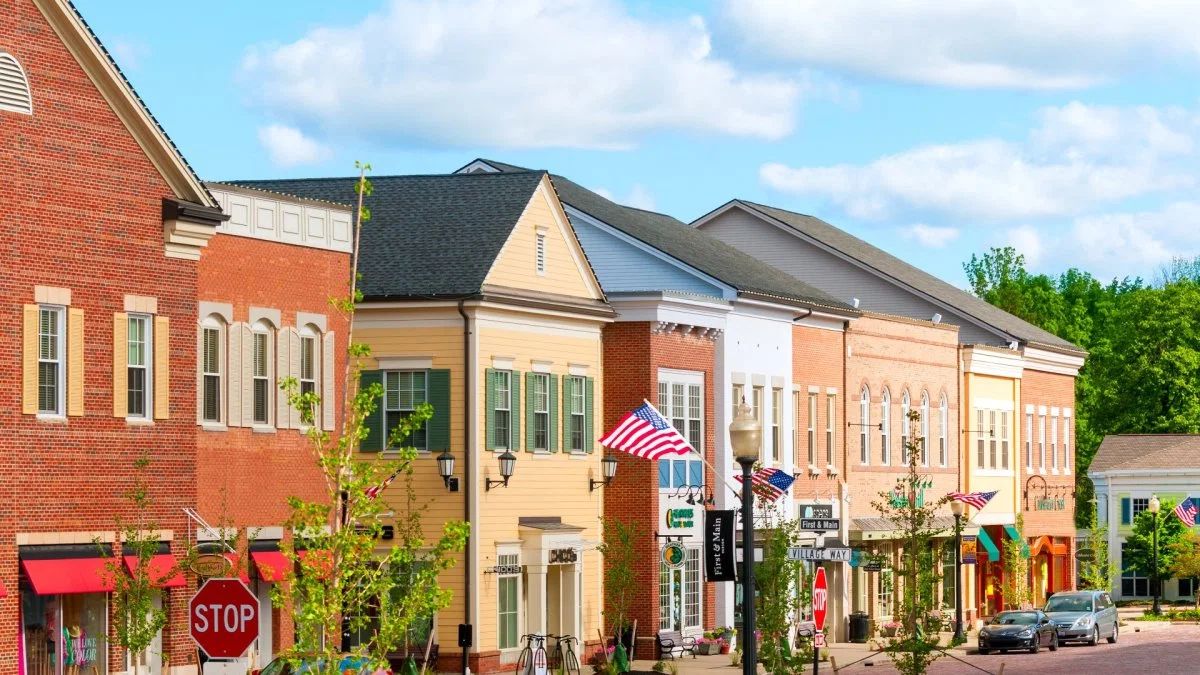
Hudson does not run trade shows. It is an affluent village centered on a historic downtown, First & Main lifestyle center, and Western Reserve Academy, with an event calendar that leans toward community gatherings, private school functions, and corporate meetings hosted by the companies headquartered along the SR-8 and I-480 corridor rather than public exhibitions.
Our work here is almost entirely corporate meeting support and shipping for Hudson-based exhibitors traveling to shows elsewhere. Several manufacturing and professional services companies have offices in Hudson's business parks, and their trade show presence typically happens at a Cleveland venue or occasionally the Knight Center in Akron rather than locally.
Hudson's position on the north side of the Cleveland-Akron corridor, closer to Cleveland via I-271 than to Akron via SR-8, means we paths it more like a Cleveland suburb than an Akron one for freight purposes, even though it shares the same Summit County market as Akron, Cuyahoga Falls, and Fairlawn.
Hudson, OH execution priorities
- Corporate meeting and event support for Hudson office parks and First & Main venues
- Booth builds and shipping for Hudson-based exhibitors traveling to Cleveland or Akron shows
- Routing via I-271 and SR-8, closer to Cleveland than Akron for freight purposes
- Storage and refurbishment for repeat corporate clients between events
- Coordination for private school and community events needing staging or signage
A village without a public exhibition venue
Hudson's downtown and First & Main district are built for retail, dining, and community events, not trade shows. There is no exhibit hall or convention space here, so any company based in Hudson needing a booth presence is by definition traveling to a venue elsewhere, most often into Cleveland or occasionally south to the Knight Center in Akron.
What Hudson has instead is meeting and event space tied to its corporate parks and to venues like the Hudson Library & Historical Society grounds, which occasionally host community and nonprofit fundraising events that call for staging, signage, or tented structure rather than a booth build.
Corporate offices and their event needs
Several manufacturing, technology, and professional services firms keep regional or corporate offices in Hudson's business parks along SR-91 and near the Hudson Corporate Center. These companies use local meeting space for internal conferences, sales trainings, and dealer events, and rely on us for staging, signage, and AV rather than a full trade show booth for on-site work.
When those same companies exhibit at a trade show, the work shifts to a standard booth build shipped out from our Cleveland shop, keeping design continuity between the local corporate event branding and the show floor presence.
Freight routing via I-271 and SR-8
Hudson sits close enough to Cleveland's eastern suburbs that our drayage paths treat it more like a Cleveland-corridor delivery than an Akron one, running I-271 south to SR-8 or SR-303 depending on the exact destination. Advance warehouse coordination for Hudson jobs follows our standard Cleveland-area intake process.
For Hudson-based exhibitors shipping to a show in a different city, we build and stage freight from our Cleveland warehouse the same way we would for any other exhibitor, using the Hudson address only for local pickup or delivery of materials, not as the shipping destination.
Drayage and material handling coordination for Hudson corporate parks also has to account for smaller loading areas than a Warehouse District, Cleveland building, since many of the office buildings along SR-91 were built for standard freight deliveries rather than event production trucks, so we confirm dock size and truck clearance before scheduling.
Booth and display work for a corporate client base
Hudson's exhibitor base is corporate and B2B, so most booth requests here call for modular exhibit systems or portable display systems suited to internal events and smaller regional shows rather than a full custom island build. We keep this inventory ready for the shorter lead times corporate clients often work with.
Custom exhibit builds do happen for Hudson companies with a larger annual trade show presence, fabricated at our Cleveland shop and shipped to the actual show city rather than assembled locally.
Labor for local meetings and shipped-out shows
Install crews for on-site Hudson work are typically smaller teams handling a corporate meeting room or an outdoor community event, while the larger labor commitment for Hudson-based clients usually happens at the destination venue for their trade show booth. We manage both under the same project structure so a client is not coordinating two separate vendor relationships.
Lodging and access for Hudson-area work
Hudson has a smaller hotel footprint than Fairlawn or downtown Akron, so exhibitor teams working local corporate events here often stay in nearby Twinsburg or Solon, both a short drive east along the I-480 corridor, or drive in for the day from a Cleveland-area hotel.
For multi-day corporate events with out-of-town attendees, we help identify block-friendly hotels along the I-480 and SR-8 corridor early, since Hudson itself has only a handful of smaller boutique properties without the room count larger meetings need.
Hudson's character and event style
Hudson's downtown and First & Main district favor a polished, historic-village aesthetic, and community or fundraising events here tend to want staging and signage that fits that look rather than standard trade show branding. We adjust material and color choices for these jobs accordingly, even when the underlying structure is the same modular system we use elsewhere.
Western Reserve Academy and the Hudson Library & Historical Society both host occasional public events that bring in vendors and exhibitors for a day, smaller in scale than a corporate trade show but still requiring the same level of coordination on setup timing and access.
Large-format printing requests for these community events tend to run smaller and more custom than a standard trade show graphic package, since signage often needs to match a specific event theme rather than a reusable corporate branding set.
Planning a Hudson event or shipment
Because Hudson jobs are usually smaller corporate or community events rather than full trade shows, we can often work with shorter lead times than a convention booking, but we still confirm venue access, parking, and any village permitting requirements ahead of an outdoor or downtown event.
Downtown Hudson and First & Main both restrict truck access during peak retail hours, so outdoor event setup usually happens early morning or the evening before, which we build into the schedule rather than treating as a scheduling conflict.
One team for Hudson meetings and shows elsewhere
Hudson-based companies get the same account management and fabrication shop whether the job is a local corporate meeting or a booth shipped to a Cleveland or Akron trade show, keeping design and branding consistent across both kinds of events.
That single relationship also simplifies budgeting for Hudson clients who run several event types a year — an internal sales meeting, a community sponsorship, and a trade show booth — since all three draw on the same crew team, warehouse, and fabrication shop instead of three separate vendor contracts.
Trade show work in Hudson, OH
Hudson, OH is part of the Cleveland event market. Shows and meetings book here alongside the larger Cleveland calendar.
Hudson, OH sits in the Secondary metro area.
Trade show work in Hudson, OH shares most of its structure with larger Cleveland projects. Where it diverges is in the nearby venue mix, freight routing, and local hotel block availability.
Cleveland trade show market
Trade shows in Cleveland move fast. Major venues book out months in advance, freight windows run tight, and the exhibitors who win their weeks are the ones who arrive with a plan already in hand.
The attendees vary by show — some weeks draw regional operators, others pull international buyers in for a single conference — but the floor mechanics stay consistent. Every booth needs graphics production, show services, labor calls, and a plan for the specific building it's landing in.
Venue marketing from Rocket Arena and Huntington Bank Field shows the downtown market is not limited to ballroom work; it also supports arena, stadium, and premium-space event programs that matter for sponsor activations and hospitality builds — a useful reference point when sizing a project.
Cleveland Clinic said on January 27, 2025 that it served the most patients in its history during 2024, reinforcing Cleveland’s continued relevance for healthcare, med-tech, and research-heavy meetings.
Music, culture, and lakefront brand events is one of the sectors that shapes the Cleveland calendar. The Rock Hall can still host 20-800-person events during construction and is building toward a larger 2,800-person event venue, while the lakefront museum corridor adds high-visibility brand-event options that are distinct from hotel inventory.
Cleveland convention venues and meeting properties
Every Cleveland show takes place in a specific building with its own rules. The venues below are common planning anchors across the local event calendar.
Across the Cleveland venue set, what changes between buildings are the labor model, the rigging approval path, the drayage setup, and the published move-in window. The plan has to match the specific building.
The Westin Cleveland Downtown. The hotel offers 20,000 square feet of downtown event space.
The Orchid Ballroom can host up to 850 guests.
Cleveland labor and venue services
There is no single labor model for Cleveland trade shows. The right approach depends on the specific venue and the show organizer's contracts.
Practically, that means pulling the current exhibitor manual for every show and confirming a handful of items in writing: which tasks the venue's house crews cover, which tasks the show's general contractor covers, and what an exhibitor or their appointed contractor can handle without escalation.
At IATSE Local 27, it serves as a referral hall for many major theatres, arenas, and convention halls in Cleveland and specifically lists the Huntington Convention Center, Public Auditorium, and Rocket Arena among its venue and employer information.
Cleveland labor requirements vary by venue, organizer, and current exhibitor manual. At the Huntington Convention Center, certain union jurisdictions may apply depending on the event.
What's included in the project scope
A full engagement covers scope development, fabrication or rental, graphics, show services, logistics, and on-site execution from move-in through dismantle.
What shows up in most budgets: structure, graphics, AV, show-service orders through the venue, labor, freight, supervision days, and closeout. Individual projects layer or remove items based on scope.
A well-run project has few surprises on install day because the handoffs upstream were tight. A bad one has many, because they weren't.
Multi-show programs add asset management: storage, refurbishment, graphic swaps, and scheduled re-kitting so the booth rolls cleanly from Cleveland to the next city on the calendar.
A clean scope definition also calls out what isn't included: show organizer fees, client staff travel, and anything the client already has under contract (lead capture platforms, CRM integrations, promotional giveaways). Those run alongside the engagement rather than inside it.
The process from start to finish
Every project starts with a scope conversation: the show, the venue, the booth number, the dates, and the budget frame. Ten minutes of specifics produces a better plan than a week of generalities.
After the brief, the work turns to the building itself. Dock windows, utility orders, rigging approvals, and labor calls are all confirmed in writing before anything goes to fabrication.
With venue details locked, production runs. Build, print, AV integration, rentals, and the show floor lead's playbook all come together in this phase.
One named show-site lead runs the install. Not a rotating crew and not a remote account manager — one person holds the floor plan, the punch list, and the labor calls from crates to doors.
Throughout show hours, the show floor lead stays present. Tech breaks, sponsor changes, venue requests — all handled without pulling the client team off the floor.
After the show, strike runs against the venue's posted window, and a same-day debrief captures what held and what needs to change before the next date.
Budget and timeline
Every project has the same cost drivers. The number depends on scope, and scope depends on a handful of specific variables.
The levers that matter: build path (custom, rental, or hybrid), footprint, venue service fees, graphics, freight, and supervision days. A 10x10 turnkey rental and a 30x50 custom island with a double deck are entirely different projects.
On timing: custom builds for Cleveland shows run best with 16 to 20 weeks of lead time. Rental programs run on 8 to 12. Anything inside 4 weeks is a rush, which means fewer options and a premium on materials.
How project performance gets measured
The measure of a good engagement is simple: on-time install, no venue callouts, clean show hours, and a closeout that makes the next event easier to book.
Exhibitors who measure programs seriously track leads, floor-booked meetings, and post-show pipeline. The build and the install are upstream inputs to those KPIs.
The post-show debrief is where the numbers get connected back to the physical booth. Which demo station drew traffic, which meeting area closed more conversations, which graphic zone attracted dwell time — that feedback shapes the next build rather than getting lost.
The advantage of a local Cleveland team
Trade Show Services of Cleveland keeps the work organized around one accountable project path. Booth design, fabrication coordination, graphics, venue communication, logistics, labor planning, show-site support, and closeout stay tied to the same brief.
The value is coordination under pressure. If a graphics issue, freight delay, or venue question appears during install, the response has to be fast, documented, and connected to the actual show plan.
Over a multi-show calendar, the compound value is fewer surprises. The second install should inherit notes from the first, the third should inherit both, and the program should become easier to forecast as the year moves forward.
Questions about Hudson, OH
Is there a convention or exhibit venue in Hudson?
No. Hudson does not have a public exhibition venue. It is a village centered on a historic downtown and First & Main lifestyle center. Companies based here needing a trade show presence travel to Cleveland or occasionally to the Knight Center in Akron.
What kind of work do you do in Hudson?
Mostly corporate meeting and event support for offices in Hudson's business parks, plus booth builds and shipping for Hudson-based companies exhibiting at shows in Cleveland or Akron. It is corporate and community event support more than trade show floor work.
Is Hudson closer to Cleveland or Akron?
Hudson sits on the north side of the Summit County market and is generally closer to Cleveland via I-271 than to downtown Akron, so we paths freight and crews for Hudson more like a Cleveland-corridor job.
Can you handle staging for a community or fundraising event in Hudson?
Yes. We support events tied to venues like the Hudson Library & Historical Society and Western Reserve Academy with staging, signage, and tented structure, matched to the village's historic aesthetic rather than standard trade show branding.
Where do exhibitor teams stay when working in Hudson?
Hudson has a limited hotel footprint, so teams typically stay in nearby Twinsburg or Solon along the I-480 corridor, or drive in for the day from a Cleveland-area hotel.
Do you ship booths out of Hudson to shows in other cities?
Yes. We regularly build booths at our Cleveland shop for clients headquartered in Hudson and ship or deliver them to the actual show venue, keeping the Hudson office as the point of contact rather than the shipping destination.
Do you work at Cleveland Public Auditorium?
Yes. Cleveland Public Auditorium is directly connected to the Huntington Convention Center. Projects at that building are planned against its specific floor rules.
How does labor work in Cleveland?
It runs venue by venue. At Huntington Convention Center of Cleveland, full-time employees of the exhibiting company or show management may set up computers, which is a narrow but important exception to more general labor assumptions. Other Cleveland venues have their own published rules, and the plan matches the specific building.
How much lead time is ideal?
Custom builds run best with 16 to 20 weeks of lead time. Rentals take 8 to 12 weeks. Work inside 4 weeks is possible but raises costs and narrows the options.
What information kicks off a project?
The show, the venue, the booth number, the dates, and a target budget range. From those, an initial scope and a realistic cost come back within a few days.
Who runs the booth on-site?
One named show-site lead runs the install, the show hours, and the strike. That person carries the floor plan and the punch list from crates to doors and reports up once a day.
Can the booth travel to the next city on our calendar?
Yes — builds are designed for modular reuse unless single-use scenic is specifically required. Same structure, swappable graphics, standard crates. Cleveland programs that roll to another city on the same calendar get handled end to end.
What happens if something breaks during show hours?
The show floor lead handles it. Minor repairs happen in place; anything larger gets sourced from the local fabricators or rerouted through the venue's service desk.