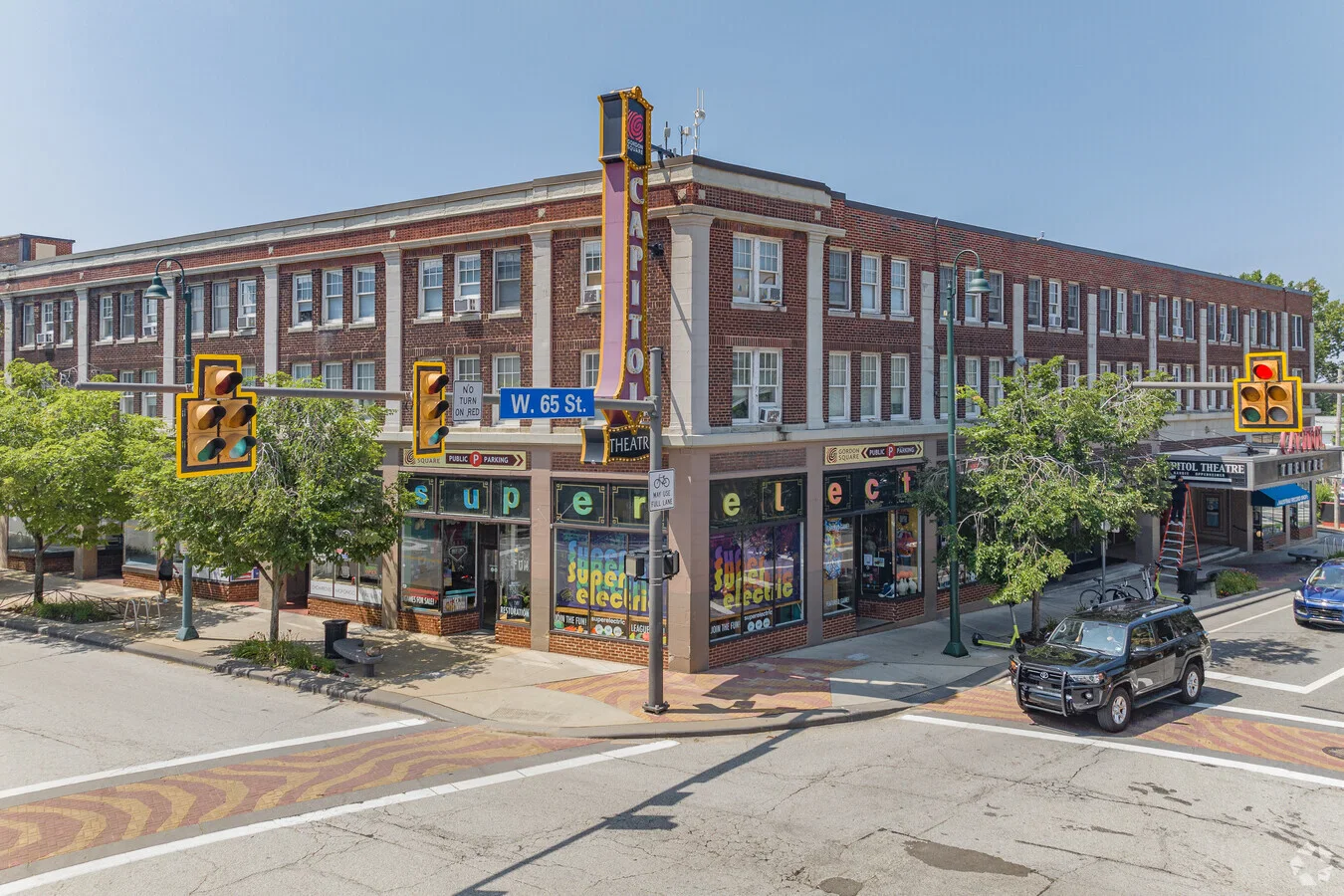
Detroit-Shoreway is the broader near-west-side neighborhood that contains the Gordon Square, Cleveland arts district at its eastern edge and extends north toward Lake Erie and the Shoreway corridor. Its mix of residential streets, converted industrial buildings, and small commercial strips makes it a working neighborhood rather than an event destination, with no convention or exhibit space of its own.
What makes Detroit-Shoreway relevant to trade-show logistics is its position: it sits between the near-downtown neighborhoods and the lakefront venue cluster at North Coast Harbor, Cleveland, close enough to the Shoreway that freight and crews staging here can reach Great Lakes Science Center, the Rock & Roll Hall of Fame, or Huntington Bank Field without ever routing through downtown surface streets.
This page covers how we use Detroit-Shoreway as a staging point for lakefront-bound programs, and how it differs from its Gordon Square, Cleveland sub-district for planning purposes.
Detroit-Shoreway, Cleveland, OH execution priorities
- Detroit-Shoreway staging positioned for a direct Shoreway run to lakefront venues
- Freight routing that bypasses downtown congestion entirely for North Coast Harbor, Cleveland shows
- Crew lodging and light-industrial warehouse space along the Detroit Avenue corridor
- Coordination with the Gordon Square, Cleveland arts district at the neighborhood's eastern edge
- Realistic call-time planning for a neighborhood between downtown and the lake
Detroit-Shoreway has no venue of its own
The neighborhood is defined by its residential streets and a working mix of light-industrial buildings, small businesses, and the Gordon Square, Cleveland arts strip at its eastern boundary, none of which include an exhibit hall, arena, or convention space. Any show floor connected to a Detroit-Shoreway address is elsewhere in the metro, most often on the lakefront or downtown.
We treat Detroit-Shoreway as a staging and transit corridor rather than a venue option. The planning question is always which direction a crew or truck needs to move from a Detroit-Shoreway address, toward the lakefront via the Shoreway, or toward downtown via Detroit Avenue and West 25th Street, and how much time that specific trip takes.
The Shoreway advantage for lakefront-bound programs
Detroit-Shoreway's northern edge runs close to the Cleveland Memorial Shoreway, which gives it a direct, largely uninterrupted paths to the lakefront venue cluster at North Coast Harbor, Cleveland. A truck or crew vehicle leaving a Detroit-Shoreway staging point for Great Lakes Science Center, the Rock & Roll Hall of Fame, or Huntington Bank Field can take the Shoreway the entire way without touching downtown's Public Square, Cleveland traffic or convention-center congestion.
This is a genuine logistics advantage for programs at those specific venues, and it is one of the reasons we sometimes recommend a Detroit-Shoreway staging point over a downtown one when the destination is on the lakefront and downtown is expected to be congested with a concurrent show.
Routing toward downtown instead
For a program headed to a downtown venue like the Huntington Convention Center of Cleveland or Rocket Arena, Detroit-Shoreway's advantage disappears somewhat, since the paths runs back through Ohio City, Cleveland and across the river rather than along the lakefront-friendly Shoreway. We still plan this paths carefully, using Detroit Avenue into West 25th Street as the primary path with the Shoreway to the Innerbelt as a backup during heavy traffic.
The distance to downtown from Detroit-Shoreway is comparable to Gordon Square, Cleveland's, generally in the fifteen-minute range depending on exactly where in the neighborhood a staging point sits, since Detroit-Shoreway spans a fairly wide area from near Ohio City, Cleveland out toward the Lakewood border.
Light-industrial warehouse and staging space
Detroit-Shoreway's mix of converted industrial buildings gives it more warehouse and light-industrial space than some of its near-west-side neighbors, and we use this for advance receiving, crate storage, and pre-show staging on programs that need more square footage than a downtown storage unit would offer at a comparable rate.
This works particularly well for multi-show program rollouts where a client wants a semi-permanent staging base between events rather than paying downtown storage rates for equipment sitting idle between shows. We coordinate pickup schedules from these spaces to land inside the actual venue's move-in window, whether that destination is downtown or the lakefront.
Clients running exhibit storage and asset management programs across several shows a year often settle on a Detroit-Shoreway warehouse specifically because it splits the difference between downtown storage costs and the added drive time of a suburban facility further out, keeping both the price and the commute reasonable for regular use.
Crew lodging along the Detroit Avenue corridor
Detroit-Shoreway has a growing set of lodging options tied to the broader revival of the Gordon Square, Cleveland district, and crews sometimes prefer the neighborhood for its restaurant scene and lower cost relative to downtown hotels. We support this for programs with flexible call times, building extra buffer into early move-in mornings to account for the drive to whichever venue the show is actually using.
For a lakefront-bound program specifically, Detroit-Shoreway lodging can actually work out to a comparable or shorter commute than some downtown hotels, since the Shoreway paths to North Coast Harbor, Cleveland is direct and avoids downtown traffic entirely.
Freight timing by destination
We plan Detroit-Shoreway freight moves differently depending on the destination venue. A lakefront-bound shipment gets a tighter, more predictable timeline since the Shoreway paths rarely has the unpredictable congestion downtown experiences during a major show. A downtown-bound shipment gets a wider buffer, since it has to navigate the same Ohio City, Cleveland-area crossing and downtown dock queue that any near-west-side staging point faces.
For expo logistics and shipping, we confirm the receiving venue's dock assignment before committing to a paths, since the difference between a Shoreway approach and a downtown surface-street approach can be significant during a congested show week.
Event types with a genuine Detroit-Shoreway touchpoint
The programs most likely to use Detroit-Shoreway are lakefront-bound shows that benefit from the Shoreway routing advantage, multi-show clients who want warehouse space with more square footage than downtown offers, and crews or client teams already based in the neighborhood for other reasons.
We do not position Detroit-Shoreway as a venue location itself. Any inquiry about hosting an event in the neighborhood is redirected to the lakefront or downtown venue that actually fits the program's needs.
Coordinating with Gordon Square, Cleveland
Gordon Square, Cleveland sits within Detroit-Shoreway's eastern edge, and the two names are frequently used together for staging purposes. We plan programs touching either as one combined zone, since the transportation question, Shoreway toward the lake or Detroit Avenue toward downtown, is the same regardless of which specific block a staging point sits on.
Where the two differ slightly is vendor access: Gordon Square, Cleveland's theater-district fabrication resources are more concentrated near West 65th Street, while Detroit-Shoreway's broader footprint has more general light-industrial and warehouse capacity spread across the wider neighborhood.
What we recommend for Detroit-Shoreway-based programs
For any program with a Detroit-Shoreway touchpoint, we recommend identifying the destination venue first and choosing the staging point's exact location within the neighborhood accordingly, closer to the Shoreway on-ramp for a lakefront show, closer to Detroit Avenue and West 25th Street for a downtown one.
We also recommend treating this neighborhood's genuine Shoreway advantage as a planning asset for lakefront programs specifically, rather than defaulting to a downtown staging point out of habit when the actual venue is on North Coast Harbor, Cleveland. For programs unsure which staging point makes more sense, we will run both paths against the venue's actual dock hours and recommend whichever holds up better under a realistic move-in day.
Trade show work in Detroit-Shoreway, Cleveland, OH
Detroit-Shoreway, Cleveland, OH falls inside the Cleveland service footprint for trade show projects.
Detroit-Shoreway, Cleveland, OH sits in the Urban west side area.
Production for Detroit-Shoreway, Cleveland, OH shows starts with the same brief we run for the rest of Cleveland: venue specifics, show dates, footprint, outcome. Freight paths and local vendor availability are the variables that shift from the city core.
The Cleveland event landscape
Cleveland runs one of the busiest trade show calendars in the region. Convention weeks stack close together, hotel blocks compete for the same nights, and the venues themselves shape what is possible on the floor.
Trade show weeks in Cleveland compress decisions. Dock windows are finite, rigging slots fill fast, and the labor calendar around a citywide conference runs hot. Exhibitors who treat planning as optional lose time they don't get back.
Destination Cleveland’s winter 2025 update says the Cleveland Museum of Natural History reopened more than 375,000 square feet of transformed space in late 2024 and that the Rock & Roll Hall of Fame expansion is creating a new 2,800-person indoor event venue — a useful reference point when sizing a project.
Venue marketing from Rocket Arena and Huntington Bank Field shows the downtown market is not limited to ballroom work; it also supports arena, stadium, and premium-space event programs that matter for sponsor activations and hospitality builds.
The buildings that host Cleveland events
Different Cleveland venues mean different floor plans, different labor rules, and different freight realities.
A venue walk — either in person or via the published floor plan — is the step that reveals constraints no spec sheet shows. Column spacing, real ceiling height at the grid point, and dock access shape what's actually buildable.
Windows on the River: it has been hosting private events for more than 25 years.
John S. Knight Center is one of the anchors. The center offers 123,000 square feet of customizable space.
Huntington Convention Center of Cleveland. Venue materials say the center provides over 520,000 square feet of meeting and event space.
How Cleveland floor operations work
Labor in Cleveland runs venue-by-venue, not citywide. Each building publishes its own rules for who handles what on the floor.
On most Cleveland shows, the labor plan takes one call with the venue's exhibitor services desk, one review of the current manual, and one email to the general contractor. Skipping any of those three is usually where problems start.
Huntington Convention Center of Cleveland — The convention center is a union facility and that certain union jurisdictions may apply based on the needs of the event.
Practical planning rules for Detroit-Shoreway, Cleveland, OH Cleveland, OH in Cleveland: Final labor assumptions should always be confirmed against the current show manual, venue team, and general service contractor. Cleveland labor requirements vary by venue, organizer, and current exhibitor manual.
Scope in Detroit-Shoreway, Cleveland, OH Cleveland, OH
A full engagement covers scope development, fabrication or rental, graphics, show services, logistics, and on-site execution from move-in through dismantle.
Typical line items include booth structure (custom or rental), graphics and print, AV and lighting, show-service orders (power, internet, rigging), labor calls against the venue's rules, freight both ways, on-site supervision, and post-show closeout documentation.
The handoffs on a project in Detroit-Shoreway, Cleveland, OH Cleveland, OH matter almost as much as the line items. Design has to hand a build-ready drawing to fabrication. Fabrication has to hand a pre-built, dry-fitted booth to crating. The crater has to hand a labeled, manifested shipment to the carrier. Every handoff is a place quality can drop.
For programs that repeat, asset management becomes part of the engagement — storage, graphic rotation, refurbishment, and re-crating are planned rather than one-off.
Scope boundary is as important as scope inclusion. Show organizer fees, client-side staff costs, and any tools the client already owns are handled outside the engagement. Defining that boundary up front prevents billing surprises later.
How a project runs
Every project starts with a scope conversation: the show, the venue, the booth number, the dates, and the budget frame. Ten minutes of specifics produces a better plan than a week of generalities.
Once scope is clear, the venue work begins. Exhibitor manual, dock times, utility order IDs, rigging submissions for hanging elements, and labor calls all get locked against the venue's actual rules.
Production brings the plan into physical form: fabrication, graphics, AV, rentals, and the named lead who will run the floor.
One named show-site lead runs the install. Not a rotating crew and not a remote account manager — one person holds the floor plan, the punch list, and the labor calls from crates to doors.
Show-hours coverage is part of every engagement — not a premium add-on. On-floor support keeps the booth running while the client team runs the pipeline.
Closeout is tight: strike, crate, manifest, storage designation, and a written post-show report delivered within a day. That document drives the next booking.
Pricing and scheduling
An honest quote itemizes the variables. There is not a single price — there is a configuration.
Cost scales with how it is built, how big it is, what the venue charges for its own services, what the graphics look like, how far the crates travel, and how many days the team stays on-site.
On timing: custom builds for Cleveland shows run best with 16 to 20 weeks of lead time. Rental programs run on 8 to 12. Anything inside 4 weeks is a rush, which means fewer options and a premium on materials.
Outcomes we optimize for
A project runs well when install clears the venue's published window, all show services land as ordered, the booth performs across every show day without pulling the client team off pipeline work, and strike clears the dock before the next occupant loads in.
Trade show ROI is measured at the lead and pipeline level. The show-floor execution either protects or undermines those numbers.
The post-show debrief is where the numbers get connected back to the physical booth. Which demo station drew traffic, which meeting area closed more conversations, which graphic zone attracted dwell time — that feedback shapes the next build rather than getting lost.
What makes our work different
Trade Show Services of Cleveland keeps the work organized around one accountable project path. Booth design, fabrication coordination, graphics, venue communication, logistics, labor planning, show-site support, and closeout stay tied to the same brief.
Good execution depends on fewer blind handoffs. The person responsible for the plan should understand the room, the service orders, the graphics package, the install sequence, and the closeout path.
Repeat programs benefit when the plan captures what happened on the floor: what arrived late, what drew traffic, what took too long to assemble, and what should change before the next show.
Questions about Detroit-Shoreway, Cleveland, OH
Is there an event venue in Detroit-Shoreway?
No. Detroit-Shoreway is a residential and light-industrial neighborhood with no exhibit hall, arena, or ballroom. Programs touching this neighborhood are staging from it while the show runs downtown or on the lakefront.
Why is Detroit-Shoreway useful for lakefront-bound programs?
Its northern edge sits close to the Cleveland Memorial Shoreway, which offers a direct paths to Great Lakes Science Center, the Rock & Roll Hall of Fame, and Huntington Bank Field without touching downtown traffic.
How does Detroit-Shoreway differ from Gordon Square, Cleveland for planning?
Gordon Square, Cleveland is the arts-district core within Detroit-Shoreway's eastern edge, with concentrated theater and studio fabrication resources. The broader Detroit-Shoreway neighborhood has more general warehouse and light-industrial space spread across a wider area.
Can you store equipment in Detroit-Shoreway between shows?
Yes. The neighborhood's converted industrial buildings offer more warehouse space than some near-downtown neighborhoods, which we use for advance receiving and staging on multi-show program rollouts.
Is Detroit-Shoreway a good crew lodging choice?
For a lakefront-bound program, sometimes yes, since the Shoreway commute to North Coast Harbor, Cleveland can rival a downtown hotel's drive time while offering lower cost and a strong restaurant scene near Gordon Square, Cleveland.
How long is the drive from Detroit-Shoreway to downtown?
Generally around fifteen minutes depending on exactly where in the neighborhood a staging point sits, routed through Ohio City, Cleveland and across the river rather than along the lakefront-friendly Shoreway.
Do you work at Huntington Bank Field?
Yes. a host-an-event section for private events and premium-space bookings. Projects at that building are planned against its specific floor rules.
How does labor work in Cleveland?
It runs venue by venue. Huntington Convention Center of Cleveland: Edlen Electric handles electrical and plumbing services on an exclusive basis, and the exhibitor services portal covers electrical, plumbing, air, water, internet, booth cleaning, catering, and rigging. Other Cleveland venues have their own published rules, and the plan matches the specific building.
How much lead time is ideal?
Custom builds run best with 16 to 20 weeks of lead time. Rentals take 8 to 12 weeks. Work inside 4 weeks is possible but raises costs and narrows the options.
What information kicks off a project?
The show, the venue, the booth number, the dates, and a target budget range. From those, an initial scope and a realistic cost come back within a few days.
Who runs the booth on-site?
One named show-site lead runs the install, the show hours, and the strike. That person carries the floor plan and the punch list from crates to doors and reports up once a day.
Can the booth travel to the next city on our calendar?
Yes — builds are designed for modular reuse unless single-use scenic is specifically required. Same structure, swappable graphics, standard crates. Cleveland programs that roll to another city on the same calendar get handled end to end.
What happens if something breaks during show hours?
The show floor lead handles it. Minor repairs happen in place; anything larger gets sourced from the local fabricators or rerouted through the venue's service desk.