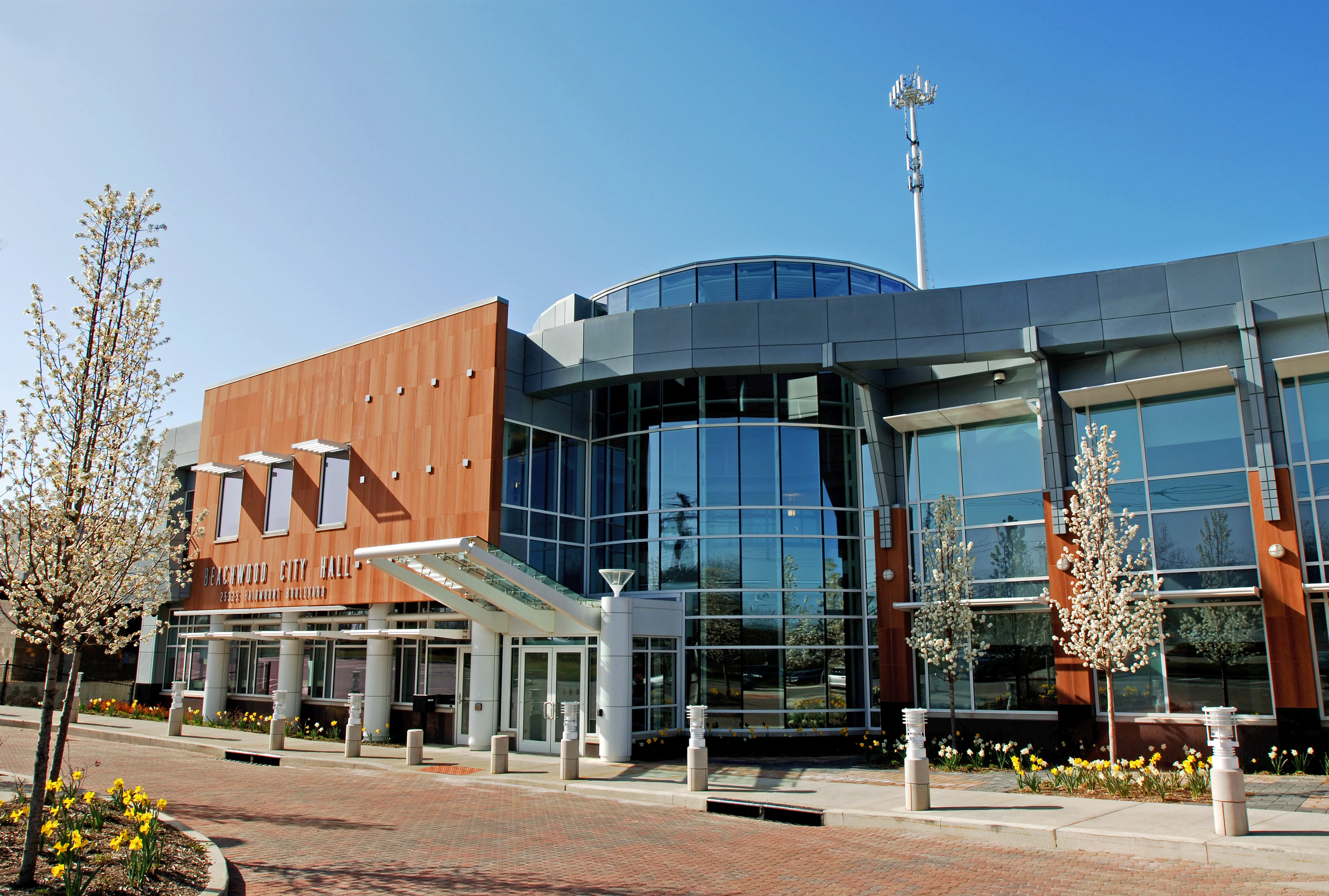
Beachwood carries more retail and corporate weight than most of Cleveland's east-side suburbs. Beachwood Place and the surrounding commercial corridor bring national retail brands and regional corporate offices into one concentrated stretch, and that combination shapes the kind of trade show and event work that originates from here: retail brand launches, corporate sales meetings, and sponsor activations tied to downtown shows are more common in Beachwood than the museum-adjacent or purely residential work we see in neighboring suburbs.
There's no dedicated exhibit hall inside Beachwood itself, so the physical event almost always happens at a Downtown Cleveland venue, but the client relationship, planning meetings, storage, and pre-event staging frequently run through a Beachwood office or retail headquarters. We treat Beachwood as a origin and staging point as much as a destination, building routing plans around I-271 and I-480 into downtown.
Corporate hotel business is also a real piece of Beachwood's event economy, with several downtown hotel brands maintaining sales relationships with Beachwood-based corporate clients for meetings, product briefings, and sponsor dinners tied to a larger show. We coordinate directly with those hotel venues when a Beachwood client's program includes an off-site reception alongside their main exhibit or booth commitment.
Beachwood, OH execution priorities
- Retail brand launch and activation support
- Corporate sales-meeting AV and staging
- Sponsor activation logistics for downtown shows
- I-271 and I-480 freight routing
- Hotel-venue coordination for corporate receptions
Retail brand activations
Beachwood Place and the surrounding retail corridor bring national and regional retail brands into direct contact with our work, whether that's an in-mall pop-up activation, a seasonal brand launch, or product-sampling event tied to a retail partnership. Mall management has its own approval process for temporary structures, power draws, and foot-traffic patterns, and we work through that process as a standard part of any Beachwood retail build.
We design these builds knowing a Beachwood retail audience skews toward shoppers rather than trade professionals, which changes the material and lighting choices compared to a B2B trade show booth aimed at industry buyers. Consumer-facing structures need to hold up to a full day of foot traffic and casual handling, so we favor durable, low-maintenance materials over the more delicate finishes sometimes used for a single-day corporate event.
Corporate sales meetings and briefings
Beachwood's corporate office density means a steady stream of internal sales meetings, quarterly briefings, and client-facing product presentations that need professional AV and staging without the scale of a full trade show.
We scale crew and equipment to the room, typically a corporate conference center or hotel meeting space near Beachwood, rather than defaulting to convention-hall-sized gear for a fifty-person sales meeting.
Sponsor activations for downtown shows
A number of Beachwood-based companies sponsor booth space, branded lounges, or activation zones at larger Downtown Cleveland shows as part of a broader marketing push, and that sponsorship work comes with its own logistics separate from standard exhibit fabrication, including sponsor-tier signage rules that vary show to show and often restrict placement, size, or branding visibility relative to the title sponsor.
We coordinate sponsor package requirements, signage approval, and placement negotiation with show organizers directly, so a Beachwood marketing team gets one point of contact instead of managing the show organizer and a fabrication vendor separately, and we flag any sponsor-tier restrictions early enough that the design doesn't need last-minute revision after the show reviews it.
Routing via I-271 and I-480
Beachwood sits at the junction of I-271 and I-480, which gives crews a genuinely fast run into Downtown Cleveland, typically twenty to twenty-five minutes outside peak hours, and also connects efficiently toward the I-X Center and airport-area venues if a program calls for it.
We use that highway access to plan realistic call times and, where a job needs same-day material runs between a Beachwood office and a downtown venue, to keep those runs on schedule rather than treating them as a logistics risk.
Hotel-venue coordination for receptions
Several Beachwood corporate clients pair their main show commitment with an off-site reception, dinner, or sponsor lounge at a downtown hotel, work that requires coordinating directly with hotel event staff rather than a convention center's operations team.
We manage that hotel-side coordination alongside the primary booth or activation build, syncing setup and breakdown times so the reception space is ready without pulling crew away from the main show floor at a critical moment.
Storage and staging near Beachwood
Because Beachwood clients tend to be repeat exhibitors and sponsors rather than one-time event hosts, storage and staging come up often, keeping display materials, signage, and sponsor collateral ready between appearances at different downtown shows without a Beachwood office having to find its own warehouse space for a booth it uses four times a year.
We store client-owned materials and stage them for pickup or direct delivery ahead of each show date, tracking wear on structural components so a Beachwood client's booth or lounge build stays presentable appearance after appearance, and flagging when graphics or finishes need refreshing before they start looking dated on the show floor.
Seasonal and holiday retail timing
Beachwood's retail calendar runs on its own seasonal rhythm, with holiday shopping periods, back-to-school pushes, and seasonal launches driving a different kind of demand than the conference-season pattern that governs most convention center work, and mall foot traffic during November and December changes what install windows are even available.
We plan Beachwood retail activation work around that separate calendar, building in lead time for holiday-season builds specifically since material and labor availability tightens across the whole metro during peak retail months, and we book crew time for Beachwood seasonal work well ahead of the general trade show calendar's own busy stretch in spring and fall.
Comparing Beachwood to nearby east-side suburbs
Clients sometimes ask how Beachwood differs from Shaker Heights or University Circle, Cleveland for event planning purposes. The venues are largely the same, Downtown Cleveland, but the client mix and the reason for the event differ meaningfully across the three.
Beachwood work skews retail and corporate-hotel driven, Shaker Heights skews legal and financial, and University Circle, Cleveland skews institutional and museum-adjacent, a distinction that shapes design tone even when two clients from different suburbs end up at the same downtown venue.
Planning lead time for Beachwood clients
Beachwood corporate and retail clients typically work on a mix of fixed show dates set by outside organizers and internally-driven timelines for product launches or sales events, and we track both types of deadlines differently since the risks and buffers involved aren't the same.
For show-tied work we build backward from the organizer's registration and shipping cutoffs, and for internally-driven Beachwood launches we work directly with the client's marketing calendar, which tends to be more flexible but also more prone to late-stage changes we plan buffer time around, keeping design revisions open later in the process than we would for a fixed convention deadline.
Trade show work in Beachwood, OH
Beachwood, OH is part of the Cleveland event market. Shows and meetings book here alongside the larger Cleveland calendar.
Beachwood, OH sits in the East suburbs area.
Production for Beachwood, OH shows starts with the same brief we run for the rest of Cleveland: venue specifics, show dates, footprint, outcome. Freight paths and local vendor availability are the variables that shift from the city core.
What drives the Cleveland calendar
Cleveland runs one of the busiest trade show calendars in the region. Convention weeks stack close together, hotel blocks compete for the same nights, and the venues themselves shape what is possible on the floor.
Exhibitors pulling back on budget in Cleveland still have to show up in the same booth neighborhoods as their competitors. Scope gets tighter; standards don't. The booths that land well are the ones built on a specific plan, not a standard layouts.
Cleveland Clinic said on January 27, 2025 that it served the most patients in its history during 2024, reinforcing Cleveland’s continued relevance for healthcare, med-tech, and research-heavy meetings — a useful reference point when sizing a project.
The Huntington Convention Center campus publicly markets more than 520,000 square feet of meeting and event space, including 225,000 square feet of exhibit hall space, two ballrooms, and 50-plus breakout rooms, which sets the practical ceiling for a booth program working the market.
Citywide conventions and association meetings is one of the sectors that shapes the Cleveland calendar. The Huntington Convention Center campus is large enough to support genuine convention and expo logistics, and the connected Hilton plus nearby downtown hotel stock make Cleveland workable for citywide programs rather than only one-off ballroom events.
The buildings that host Cleveland events
Different Cleveland venues mean different floor plans, different labor rules, and different freight realities.
The right building depends on the show: a consumer expo wants open aisles and broad traffic flow; a corporate conference wants controlled breakout space; a brand activation wants a venue that can carry scenic and production without fighting the architecture.
Windows on the River. It has been hosting private events for more than 25 years.
John S. Knight Center is one of the anchors. The center offers 123,000 square feet of customizable space.
Huntington Convention Center of Cleveland: venue materials say the center provides over 520,000 square feet of meeting and event space.
How Cleveland floor operations work
Labor in Cleveland runs venue-by-venue, not citywide. Each building publishes its own rules for who handles what on the floor.
On most Cleveland shows, the labor plan takes one call with the venue's exhibitor services desk, one review of the current manual, and one email to the general contractor. Skipping any of those three is usually where problems start.
Huntington Convention Center of Cleveland — The convention center is a union facility and that certain union jurisdictions may apply based on the needs of the event.
Practical planning rules for Beachwood, OH Cleveland, OH in Cleveland: Exclusive utility and venue-service vendors should be confirmed early so booth, AV, and internet scope does not drift. Arena, stadium, and museum projects should be planned as venue-led operating environments with their own approvals and access rules.
Line items on a typical project
Projects in Beachwood, OH Cleveland, OH typically include design work, fabrication or rental sourcing, graphics production, show-service paperwork, freight, install, show-hours coverage, and strike.
Typical line items include booth structure (custom or rental), graphics and print, AV and lighting, show-service orders (power, internet, rigging), labor calls against the venue's rules, freight both ways, on-site supervision, and post-show closeout documentation.
The handoffs on a project in Beachwood, OH Cleveland, OH matter almost as much as the line items. Design has to hand a build-ready drawing to fabrication. Fabrication has to hand a pre-built, dry-fitted booth to crating. The crater has to hand a labeled, manifested shipment to the carrier. Every handoff is a place quality can drop.
For programs that repeat, asset management becomes part of the engagement — storage, graphic rotation, refurbishment, and re-crating are planned rather than one-off.
A clean scope definition also calls out what isn't included: show organizer fees, client staff travel, and anything the client already has under contract (lead capture platforms, CRM integrations, promotional giveaways). Those run alongside the engagement rather than inside it.
How a project runs
First step on any project is pinning down the show, the floor plan, the deadlines, and what success actually looks like. Everything downstream hinges on those answers.
Once scope is clear, the venue work begins. Exhibitor manual, dock times, utility order IDs, rigging submissions for hanging elements, and labor calls all get locked against the venue's actual rules.
Production covers fabrication, graphics, AV spec, rentals, and crew chief assignment. It is the longest phase of most projects and the one where timelines are either protected or lost.
The install phase has one owner on the floor. That person handles the labor calls, the graphics questions, the sequence adjustments, and the daily update.
Show-hours coverage is part of every engagement — not a premium add-on. On-floor support keeps the booth running while the client team runs the pipeline.
Strike and closeout happen the same day. Storage labels, outbound manifests, vendor performance notes, and a written debrief go out within 24 hours of doors closing.
What it costs and how fast it moves
An honest quote itemizes the variables. There is not a single price — there is a configuration.
Six variables drive the cost: custom versus rental, booth footprint and complexity, venue-specific labor and rigging fees, graphics scope and substrate, freight distance and timing, and the number of on-site supervision days.
A clean schedule starts 4 to 5 months out for custom work and 2 to 3 months for rentals. Shorter lead times are workable but push rush premiums and limit material choices.
Outcomes we optimize for
A project runs well when install clears the venue's published window, all show services land as ordered, the booth performs across every show day without pulling the client team off pipeline work, and strike clears the dock before the next occupant loads in.
Most programs in Cleveland are evaluated on lead-capture volume, meetings booked on the floor, and qualified-pipeline attribution after the show. The booth is a means to those numbers — it is not the number itself.
Client teams sometimes want the booth to carry the pipeline on its own, but the best-performing programs treat the booth as a platform and put real operators on it. On-floor conversation discipline moves the KPIs more than any scenic decision.
How we're built to run your project
Trade Show Services of Cleveland supports Cleveland exhibitors with a planning model that keeps design decisions, production details, and show-site responsibilities visible before move-in begins.
Good execution depends on fewer blind handoffs. The person responsible for the plan should understand the room, the service orders, the graphics package, the install sequence, and the closeout path.
Consistency across show dates matters because many exhibitors reuse decisions, graphics, crates, and layouts across multiple venues. A documented plan helps the next event start from what was learned instead of starting over.
Questions about Beachwood, OH
Does Beachwood have its own venue for trade shows?
No. Beachwood is a retail and corporate hub without a dedicated exhibit hall, so the physical show or event happens at a Downtown Cleveland venue, while planning, storage, and staging often run through a Beachwood office or retail headquarters.
Can you support a retail brand activation at Beachwood Place?
Yes. We build in-mall pop-up activations, seasonal launches, and product-sampling events for retail brands, designing for a shopper audience rather than the industry-buyer audience typical of a B2B trade show booth.
Do you handle sponsor activations for Beachwood companies sponsoring downtown shows?
Yes. We coordinate sponsor package requirements, signage approval, and placement directly with show organizers, giving a Beachwood marketing team a single point of contact for both the sponsorship logistics and the physical build.
How long does it take to get from Beachwood to Downtown Cleveland venues?
Typically twenty to twenty-five minutes via I-271 and I-480 outside peak hours, which supports realistic crew call times and same-day material runs when a job needs them.
Can you coordinate a hotel reception alongside our main booth at a downtown show?
Yes. We manage hotel-side coordination for receptions, dinners, or sponsor lounges alongside the primary exhibit build, syncing timing so both run smoothly without pulling crew away from the main show floor at a critical moment.
Do you store materials for repeat Beachwood exhibitors and sponsors?
Yes, we store and stage display materials, signage, and sponsor collateral between shows, tracking wear so a Beachwood client's booth or lounge stays presentable across multiple appearances rather than needing a full rebuild every time.
Do you work at Huntington Convention Center of Cleveland?
Yes. Venue materials say the center provides over 520,000 square feet of meeting and event space. Projects at that building are planned against its specific floor rules.
How does labor work in Cleveland?
It runs venue by venue. Huntington Convention Center of Cleveland: Edlen Electric handles electrical and plumbing services on an exclusive basis, and the exhibitor services portal covers electrical, plumbing, air, water, internet, booth cleaning, catering, and rigging. Other Cleveland venues have their own published rules, and the plan matches the specific building.
How much lead time is ideal?
Custom builds run best with 16 to 20 weeks of lead time. Rentals take 8 to 12 weeks. Work inside 4 weeks is possible but raises costs and narrows the options.
What information kicks off a project?
The show, the venue, the booth number, the dates, and a target budget range. From those, an initial scope and a realistic cost come back within a few days.
Who runs the booth on-site?
One named show-site lead runs the install, the show hours, and the strike. That person carries the floor plan and the punch list from crates to doors and reports up once a day.
Can the booth travel to the next city on our calendar?
Yes — builds are designed for modular reuse unless single-use scenic is specifically required. Same structure, swappable graphics, standard crates. Cleveland programs that roll to another city on the same calendar get handled end to end.
What happens if something breaks during show hours?
The show floor lead handles it. Minor repairs happen in place; anything larger gets sourced from the local fabricators or rerouted through the venue's service desk.