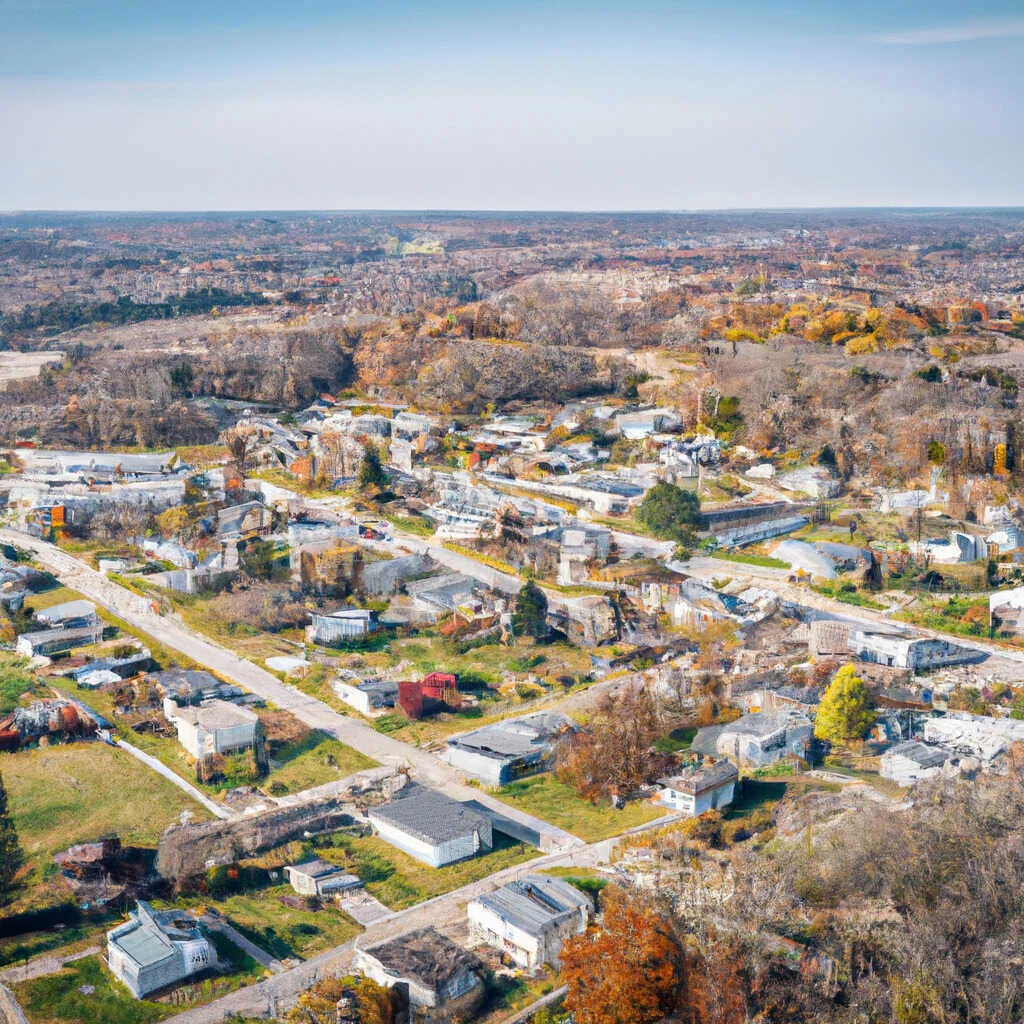
Avon is one of the fastest-growing communities on Cleveland's western edge, a Lorain County suburb that has added corporate offices, distribution facilities, and retail along the Avon Commons corridor and the I-90 interchange over the past decade, well beyond the older inner-ring suburbs closer to the lake. Companies headquartered here are newer to the region's exhibit and convention circuit than Lakewood or Westlake firms, often opening a regional office in Avon specifically because of the interstate access rather than proximity to downtown.
That growth has not shortened the drive. Avon sits roughly thirty minutes from Downtown Cleveland under normal I-90 conditions, the longest commute of any west-side suburb we cover regularly, and closer in practice to the I-X Center than to the downtown convention core. We build every Avon-based show around that real distance.
Avon's newer commercial development also means better loading and staging infrastructure than the older suburbs offer, wide lots, modern dock doors, and less competition for curb space, which offsets some of the added drive time on the staging side even though it does not shorten the highway leg.
Avon, OH execution priorities
- Thirty-minute I-90 corridor into Downtown Cleveland
- Faster access to the I-X Center than to downtown
- Modern dock infrastructure at newer Avon Commons offices
- Distribution and logistics client support
- Coordination with Avon Lake and Westlake for shared routing
Avon's growth and its exhibitor base
Avon has grown faster than any other suburb in this network over the past ten years, adding corporate office parks, distribution centers, and the Avon Commons retail corridor along the I-90 interchange. Many of the companies we work with here are relatively new to the region, having chosen Avon for the interstate access and available commercial real estate rather than legacy ties to Downtown Cleveland.
That newness shows up in how these companies exhibit: fewer standing relationships with specific downtown venues, more openness to whichever location, downtown or the I-X Center, fits the show best. We spend more time on venue selection with Avon clients than with companies in the older, more established suburbs, walking through the tradeoffs between each option before locking a booking.
The real distance from Avon to Cleveland's venues
Avon sits roughly thirty minutes from Downtown Cleveland via I-90 under normal traffic, the longest regular commute in our west-side coverage area, and that number climbs during rush hour or when a downtown event backs up the Shoreway approach. We do not shorten this estimate for clients; the added time gets built into the schedule from the first planning call.
For I-X Center shows, the drive from Avon is somewhat shorter, using I-90 to I-480 rather than running the full length into downtown, which is one reason we ask about venue location early rather than assuming a downtown default.
Staging advantages of newer commercial development
Avon Commons and the surrounding office parks were built within the last fifteen years with modern loading infrastructure, wide truck aprons and dedicated dock doors rather than retrofit curb access, which makes staging a large build genuinely easier here than in Lakewood or Rocky River. We take advantage of that when a job needs to stage a full trailer load ahead of a multi-day show.
This modern infrastructure does not offset the extra highway time, but it does mean less time lost to the staging and loading process itself, which partially balances the schedule.
Distribution and logistics clients based in Avon
Avon's growth has attracted a number of distribution and logistics operations drawn by the I-90 access, and these clients often exhibit at industry trade shows with their own warehousing and equipment already available. Our role for these clients tends toward exhibit fabrication, graphics, and booth design rather than full material handling, similar to what we see in North Olmsted.
We coordinate closely with these clients' internal logistics teams rather than duplicating capability they already have, which usually means a leaner crew on our side and a faster, more collaborative build process. It also means fewer surprises on show day, since their team already knows the freight and equipment involved.
Storage and freight planning from Avon
Given the longer drive to Cleveland's core venues, we favor consolidated single-trip freight moves out of Avon rather than the incremental deliveries we might use for a closer suburb like Lakewood, since each additional trip adds thirty minutes each way rather than fifteen. Booth components, graphics, and hardware typically travel together on one truck.
For clients running the same show multiple years, we keep Avon-area storage stocked with reusable structural components between events, cutting down on how much needs to travel the full I-90 distance for a repeat show. This is especially useful for exhibitors who add a new element each year rather than rebuilding the entire booth from scratch.
Hotel and crew lodging for an Avon-based show
Avon has a growing hotel inventory of its own near the I-90 interchange, serving both the local corporate travel market and I-X Center-bound exhibitors, and it can work as a lodging option for crew when the target venue is on the west side. For downtown shows, we still generally paths crew to a downtown property, since the thirty-minute commute is too long to justify for a multi-day build.
We evaluate this decision show by show rather than applying a blanket rule, since a short single-day event at the I-X Center might not justify a downtown hotel stay at all, while a longer national program usually does.
Event types for Avon-based exhibitors
Given the mix of newer corporate offices and distribution operations in Avon, we see a fairly even split between standard convention booths and industry-specific logistics or manufacturing trade shows at the I-X Center. Fewer Avon clients run the smaller neighborhood-style activations common closer to the urban core.
Avon Commons itself occasionally hosts smaller retail or community events that call for a pop-up display rather than a full trade show booth, work we handle with a lighter crew and simpler structure than a convention build.
Seasonal weather along the I-90 corridor
Avon sits far enough from the immediate lakeshore to avoid the heaviest lake-effect snow bands that hit Lakewood and Rocky River, but the full I-90 run into Cleveland still passes through areas that see standard winter slowdowns during a regional storm. We treat an Avon departure as moderate winter risk and add buffer time for any early-morning January or February build.
Outside of winter, I-90 traffic volume, not weather, is the primary scheduling variable, particularly around holiday travel weekends when the corridor carries more long-distance traffic than a typical weekday.
How we plan an Avon-based show
We confirm the target venue first, since the choice between downtown and the I-X Center meaningfully changes both the paths and the drive time from Avon. From there we build a single consolidated freight trip rather than multiple smaller ones, taking advantage of Avon's modern loading infrastructure to load efficiently despite the longer highway leg.
For repeat clients, particularly the distribution and logistics companies common in Avon, we coordinate directly with their internal teams from the start to avoid duplicating capability and to keep the crew size appropriate to what they actually need from us.
About Avon, OH
Avon, OH falls inside the Cleveland service footprint for trade show projects.
Avon, OH sits in the Far west suburbs area.
Production for Avon, OH shows starts with the same brief we run for the rest of Cleveland: venue specifics, show dates, footprint, outcome. Freight paths and local vendor availability are the variables that shift from the city core.
How Cleveland floor operations work
Labor in Cleveland runs venue-by-venue, not citywide. Each building publishes its own rules for who handles what on the floor.
On most Cleveland shows, the labor plan takes one call with the venue's exhibitor services desk, one review of the current manual, and one email to the general contractor. Skipping any of those three is usually where problems start.
Huntington Convention Center of Cleveland — The convention center is a union facility and that certain union jurisdictions may apply based on the needs of the event.
Practical planning rules for Avon, OH Cleveland, OH in Cleveland: Final labor assumptions should always be confirmed against the current show manual, venue team, and general service contractor. Cleveland labor requirements vary by venue, organizer, and current exhibitor manual.
The buildings that host Cleveland events
Different Cleveland venues mean different floor plans, different labor rules, and different freight realities.
A venue walk — either in person or via the published floor plan — is the step that reveals constraints no spec sheet shows. Column spacing, real ceiling height at the grid point, and dock access shape what's actually buildable.
The Westin Cleveland Downtown is one of the anchors. The hotel offers 20,000 square feet of downtown event space.
The Cleveland event landscape
Cleveland runs one of the busiest trade show calendars in the region. Convention weeks stack close together, hotel blocks compete for the same nights, and the venues themselves shape what is possible on the floor.
Trade show weeks in Cleveland compress decisions. Dock windows are finite, rigging slots fill fast, and the labor calendar around a citywide conference runs hot. Exhibitors who treat planning as optional lose time they don't get back.
Destination Cleveland’s winter 2025 update says the Cleveland Museum of Natural History reopened more than 375,000 square feet of transformed space in late 2024 and that the Rock & Roll Hall of Fame expansion is creating a new 2,800-person indoor event venue.
Venue marketing from Rocket Arena and Huntington Bank Field shows the downtown market is not limited to ballroom work; it also supports arena, stadium, and premium-space event programs that matter for sponsor activations and hospitality builds, which sets the practical ceiling for a booth program working the market.
Scope in Avon, OH Cleveland, OH
Project scope usually spans design, fabrication, graphics, AV, labor coordination, freight, install, show-hours support, and strike.
Typical line items include booth structure (custom or rental), graphics and print, AV and lighting, show-service orders (power, internet, rigging), labor calls against the venue's rules, freight both ways, on-site supervision, and post-show closeout documentation.
The handoffs on a project in Avon, OH Cleveland, OH matter almost as much as the line items. Design has to hand a build-ready drawing to fabrication. Fabrication has to hand a pre-built, dry-fitted booth to crating. The crater has to hand a labeled, manifested shipment to the carrier. Every handoff is a place quality can drop.
For programs that repeat, asset management becomes part of the engagement — storage, graphic rotation, refurbishment, and re-crating are planned rather than one-off.
Scope boundary is as important as scope inclusion. Show organizer fees, client-side staff costs, and any tools the client already owns are handled outside the engagement. Defining that boundary up front prevents billing surprises later.
How a project runs
First step on any project is pinning down the show, the floor plan, the deadlines, and what success actually looks like. Everything downstream hinges on those answers.
Venue coordination comes next. That means pulling the current exhibitor manual, confirming dock and freight windows, submitting rigging approvals where needed, and placing utility orders against the building's published specs.
With venue details locked, production runs. Build, print, AV integration, rentals, and the show floor lead's playbook all come together in this phase.
The install phase has one owner on the floor. That person handles the labor calls, the graphics questions, the sequence adjustments, and the daily update.
During show hours, the booth functions as a live operating space. A booth supervisor manages repairs, sponsor requests, lead-capture issues, and any venue questions so client staff can focus on conversations.
After the show, strike runs against the venue's posted window, and a same-day debrief captures what held and what needs to change before the next date.
Pricing and scheduling
Pricing is driven by real line items: fabrication or rental, graphics, show services, labor, freight, and travel where it applies. Round numbers without that breakdown usually hide something.
The levers that matter: build path (custom, rental, or hybrid), footprint, venue service fees, graphics, freight, and supervision days. A 10x10 turnkey rental and a 30x50 custom island with a double deck are entirely different projects.
A clean schedule starts 4 to 5 months out for custom work and 2 to 3 months for rentals. Shorter lead times are workable but push rush premiums and limit material choices.
Outcomes we optimize for
A successful project in Cleveland looks like a booth that lands on time, passes venue inspection on the first walk, runs without incident through show hours, and ships out the same day it strikes.
Exhibitors who measure programs seriously track leads, floor-booked meetings, and post-show pipeline. The build and the install are upstream inputs to those KPIs.
Client teams sometimes want the booth to carry the pipeline on its own, but the best-performing programs treat the booth as a platform and put real operators on it. On-floor conversation discipline moves the KPIs more than any scenic decision.
What makes our work different
Trade Show Services of Cleveland supports Cleveland exhibitors with a planning model that keeps design decisions, production details, and show-site responsibilities visible before move-in begins.
The difference shows up before the dock opens. A clear project owner can confirm what the building requires, what the show organizer controls, which tasks belong to house services, and which decisions need client approval before the schedule gets tight.
Over a multi-show calendar, the compound value is fewer surprises. The second install should inherit notes from the first, the third should inherit both, and the program should become easier to forecast as the year moves forward.
Questions about Avon, OH
How long is the drive from Avon to Downtown Cleveland?
About thirty minutes under normal I-90 traffic, the longest regular commute in our west-side coverage area. It runs longer during rush hour or a downtown event.
Is Avon closer to the I-X Center than to downtown?
Generally yes. The paths runs I-90 to I-480 rather than the full length into downtown, which is one reason we confirm the target venue early in planning.
Do you work with distribution and logistics companies based in Avon?
Regularly. Many already have their own warehousing and equipment, so our role shifts toward exhibit fabrication, graphics, and booth design rather than full material handling.
Do you stage builds using the newer Avon Commons office infrastructure?
Yes. Avon Commons and nearby office parks have modern dock doors and wide truck aprons built within the last fifteen years, which makes staging a large build easier than in the older inner-ring suburbs.
Where does crew stay for an Avon-based show?
For I-X Center or local shows, often in Avon itself, which has a growing hotel inventory near the I-90 interchange. For downtown shows, we generally paths crew to a downtown property instead.
How do you handle freight given the longer drive from Avon?
We consolidate into a single trip rather than multiple smaller deliveries, since each additional trip adds thirty minutes each way. Reusable components stay in Avon-area storage between repeat shows.
Do you work at Windows on the River?
Yes. it offers multiple event spaces inside the FirstEnergy Powerhouse with views of the skyline and Cuyahoga River. Projects at that building are planned against its specific floor rules.
How does labor work in Cleveland?
It runs venue by venue. Huntington Convention Center of Cleveland: Edlen Electric handles electrical and plumbing services on an exclusive basis, and the exhibitor services portal covers electrical, plumbing, air, water, internet, booth cleaning, catering, and rigging. Other Cleveland venues have their own published rules, and the plan matches the specific building.
How much lead time is ideal?
Custom builds run best with 16 to 20 weeks of lead time. Rentals take 8 to 12 weeks. Work inside 4 weeks is possible but raises costs and narrows the options.
What information kicks off a project?
The show, the venue, the booth number, the dates, and a target budget range. From those, an initial scope and a realistic cost come back within a few days.
Who runs the booth on-site?
One named show-site lead runs the install, the show hours, and the strike. That person carries the floor plan and the punch list from crates to doors and reports up once a day.
Can the booth travel to the next city on our calendar?
Yes — builds are designed for modular reuse unless single-use scenic is specifically required. Same structure, swappable graphics, standard crates. Cleveland programs that roll to another city on the same calendar get handled end to end.
What happens if something breaks during show hours?
The show floor lead handles it. Minor repairs happen in place; anything larger gets sourced from the local fabricators or rerouted through the venue's service desk.