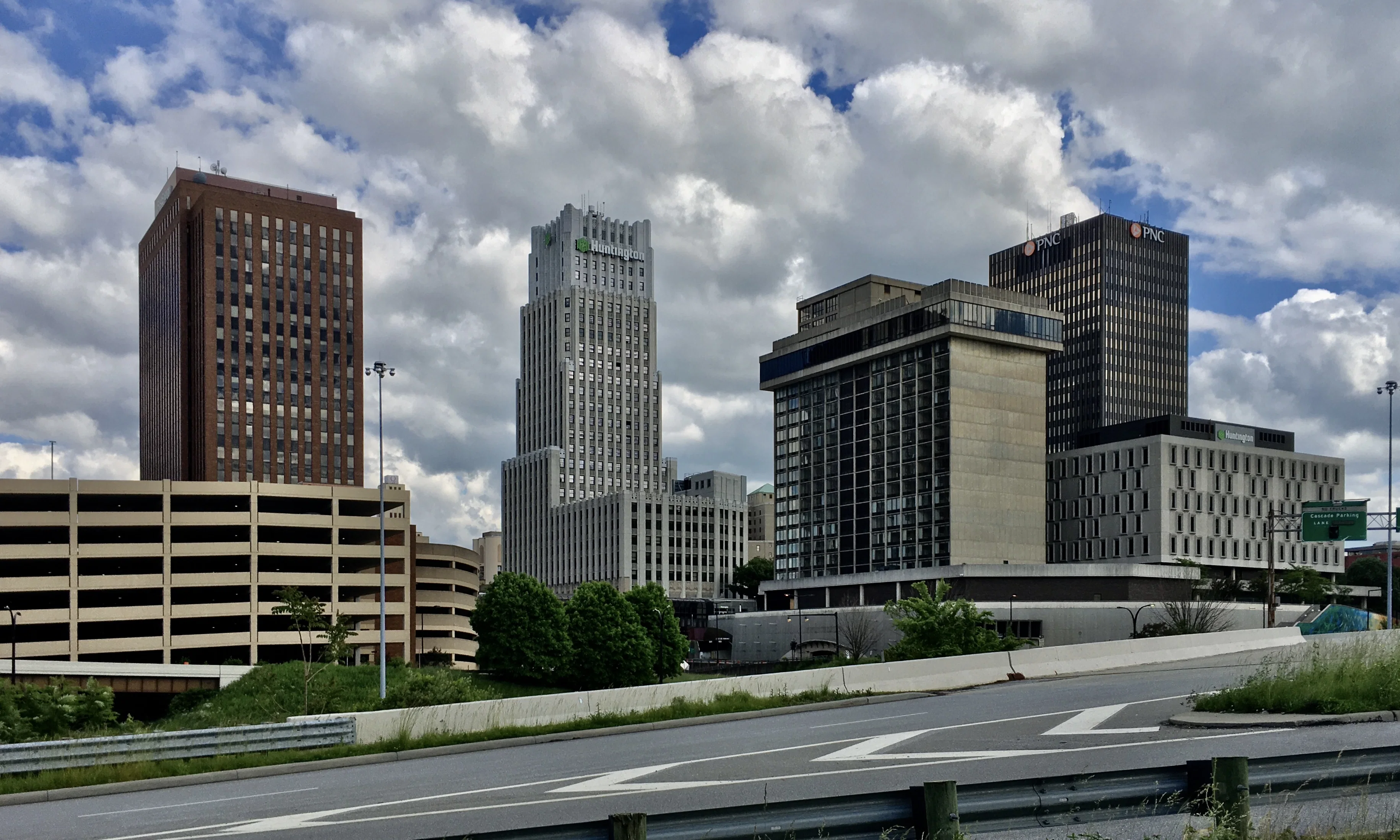
Akron is the largest city in the Cleveland trade show market outside Cleveland itself, and it runs on its own schedule. The John S. Knight Center downtown hosts regional conferences, association meetings, and smaller consumer shows year-round, and the city's exhibitor base skews toward polymer, rubber, and advanced-materials manufacturers who grew up a few miles from Goodyear's original plant. Companies here are used to shipping product to Cleveland for the larger shows and expect the same crew back for setup and teardown.
We treat Akron as a full second market rather than a satellite of Cleveland. That means a dedicated point of contact who knows the I-77 corridor, load-in windows at the Knight Center and at the University of Akron's event spaces, and a warehouse routing plan that does not add a day to transit just because the show floor is in Summit County instead of Downtown Cleveland. Exhibitors who split programs between an Akron conference and a Cleveland trade show get one crew, one schedule, and one point of contact for both.
Most of our Akron work is smaller in scale than the major Cleveland convention floors — regional B2B conferences, association annual meetings, university-affiliated events, and manufacturer open houses — but the production standard does not drop. Booth builds, signage, AV, and labor crews are the same teams that staff the larger Cleveland shows, moved 35 minutes south for the day.
Akron, OH execution priorities
- Direct routing on I-77 between our Cleveland warehouse and Akron venues
- Load-in familiarity with the John S. Knight Center and University of Akron event spaces
- Crews who also work the larger Cleveland shows the same week
- Local hotel block relationships for exhibitor teams staying overnight in Akron
- Coordination for programs that combine an Akron conference with a Cleveland trade show
Getting crews and freight into Akron
Our warehouse sits closer to Downtown Cleveland, so every Akron job starts with a drayage plan that accounts for the extra 35 minutes on I-77 without treating it as a special case. Trucks run the same paths exhibitors' own product shipments use, and load-in times at the John S. Knight Center are built into the schedule the same way we schedule Huntington Convention Center or the I-X Center.
Akron's downtown loading docks are smaller than the major Cleveland halls, so freight sequencing matters more here. We stage material handling in order of booth size and install complexity so smaller exhibitors are not waiting behind a large custom build on a narrow dock.
The John S. Knight Center and other Akron event spaces
The John S. Knight Center is Akron's primary conference and meeting venue, connected to the downtown Hilton and within walking distance of the Akron Civic Theatre and the University of Akron campus. It runs association conferences, regional B2B events, and civic gatherings rather than the large trade show floors Cleveland's convention center handles, so booth footprints tend to run smaller and floor plans change more often between events.
University of Akron facilities, including the student union and event center, also host recruiting fairs, industry expos, and academic conferences that bring in exhibitors from the region's polymer and manufacturing sector. We staff both kinds of events with the same crews, adjusting booth scale to the room rather than defaulting to a Cleveland-size build.
Freight and drayage from the Cleveland core
Exhibitor-appointed contractor coordination and advance warehouse receiving both run through our Cleveland facility before material moves south, which keeps Akron shows on the same drayage and material handling process as the larger Downtown Cleveland shows. Advance shipments land at our warehouse, get inventoried, and go out on the same truck schedule that handles Cleveland convention center jobs.
For exhibitors shipping directly to the Akron venue instead of through advance warehouse, we coordinate delivery windows with venue loading dock staff, who work on a tighter schedule than the larger Cleveland halls and need more precise timing.
Booth fabrication and build timelines
Custom exhibit builds for Akron shows come out of the same fabrication shop that handles Cleveland's larger convention floors, sized to fit Akron's smaller footprints and lower ceiling clearances in some meeting rooms. Modular exhibit systems are the most common request for Akron conferences, since programs often repeat annually with modest changes to graphics and messaging rather than a full rebuild.
We keep booth refurbishment and reconfiguration turnarounds short for Akron clients who exhibit at both an Akron conference and a Cleveland trade show in the same quarter, reusing structure where the floor plan allows and refreshing graphics between events.
Labor and installation crews on the Akron paths
Trade show labor management for Akron jobs draws from the same crew pool as our Cleveland install and dismantle teams, which means Akron exhibitors are not working with a second-string crew unfamiliar with our build standards. Crew leads who know the Knight Center's dock access and freight elevator limitations are scheduled specifically for Akron week.
Show site supervision on-site during Akron events follows the same reporting structure as Cleveland shows, with a single project manager tracking both venues when a client runs events in each city during the same week.
Housing and hotel coordination
Exhibitor teams working an Akron show without a same-day return to Cleveland typically stay downtown near the Knight Center, where the connected Hilton and several nearby chain hotels give quick access to load-in the next morning. We help exhibitors book blocks during peak conference season, when Akron's downtown hotel inventory is smaller than Cleveland's and fills faster relative to demand.
Akron's manufacturing and association base
Akron's exhibitor pool leans heavily on polymer science, rubber and tire manufacturing, and the advanced materials companies that grew out of that industry, along with a steady calendar of statewide association conferences that rotate through the Knight Center. Booths for this audience tend to prioritize technical product demonstration space and meeting areas over large-format graphics.
Sponsorship activation buildouts and product launch environments for Akron manufacturers often coordinate with a parallel presence at a larger Cleveland trade show later the same season, which is one reason we keep design files and structure specs shared across both markets.
Planning ahead for Akron events
Because the Knight Center's calendar turns over more often than the major Cleveland halls, Akron dates can shift with less notice. We build a buffer into advance shipping deadlines for Akron shows and confirm dock access windows closer to the event date than we would for a Cleveland convention center booking with a longer lead time.
One team across Akron and Cleveland
Exhibitors who show in both Akron and Downtown Cleveland get one account manager, one warehouse intake process, and crews who already know both venues. That single point of contact matters most for companies running a regional Akron conference in spring and a larger Cleveland trade show later in the year, where reusing structure and graphics assets saves real fabrication cost.
About Akron, OH
Akron, OH falls inside the Cleveland service footprint for trade show projects.
Akron, OH sits in the Secondary metro area.
Production for Akron, OH shows starts with the same brief we run for the rest of Cleveland: venue specifics, show dates, footprint, outcome. Freight paths and local vendor availability are the variables that shift from the city core.
Cleveland trade show market
Exhibiting in Cleveland means working inside an established event ecosystem. The venues, the labor model, and the local production capacity all behave in predictable patterns.
Exhibitors pulling back on budget in Cleveland still have to show up in the same booth neighborhoods as their competitors. Scope gets tighter; standards don't. The booths that land well are the ones built on a specific plan, not a standard layouts.
the market with roughly 24,000 hotel rooms across Northeast Ohio, about 5,000 rooms in 18 downtown hotels, 600 connected rooms at the convention-center campus, and roughly 3,000 rooms within five miles of Cleveland Hopkins International Airport.
Cleveland Hopkins International Airport reported more than 10 million annual passengers and 47 nonstop destinations, which materially supports exhibitor, crew, and attendee lift into the market — a useful reference point when sizing a project.
The advantage of a local Cleveland team
Trade Show Services of Cleveland supports Cleveland exhibitors with a planning model that keeps design decisions, production details, and show-site responsibilities visible before move-in begins.
The difference shows up before the dock opens. A clear project owner can confirm what the building requires, what the show organizer controls, which tasks belong to house services, and which decisions need client approval before the schedule gets tight.
Over a multi-show calendar, the compound value is fewer surprises. The second install should inherit notes from the first, the third should inherit both, and the program should become easier to forecast as the year moves forward.
Cleveland convention venues and meeting properties
Every Cleveland show takes place in a specific building with its own rules. The venues below are common planning anchors across the local event calendar.
A venue walk — either in person or via the published floor plan — is the step that reveals constraints no spec sheet shows. Column spacing, real ceiling height at the grid point, and dock access shape what's actually buildable.
Hotel Cleveland: destination Cleveland’s winter 2025 meetings update says Hotel Cleveland reopened after a $90 million renovation.
The property has 491 rooms and 59,000 square feet of modernized meeting space.
The Westin Cleveland Downtown. The hotel offers 20,000 square feet of downtown event space.
Cleveland labor and venue services
There is no single labor model for Cleveland trade shows. The right approach depends on the specific venue and the show organizer's contracts.
Practically, that means pulling the current exhibitor manual for every show and confirming a handful of items in writing: which tasks the venue's house crews cover, which tasks the show's general contractor covers, and what an exhibitor or their appointed contractor can handle without escalation.
At Huntington Convention Center of Cleveland, full-time employees of the exhibiting company or show management may set up computers, which is a narrow but important exception to more general labor assumptions.
Arena, stadium, and museum projects should be planned as venue-led operating environments with their own approvals and access rules. Final labor assumptions should always be confirmed against the current show manual, venue team, and general service contractor.
Line items on a typical project
A full engagement covers scope development, fabrication or rental, graphics, show services, logistics, and on-site execution from move-in through dismantle.
What shows up in most budgets: structure, graphics, AV, show-service orders through the venue, labor, freight, supervision days, and closeout. Individual projects layer or remove items based on scope.
Good execution comes from keeping the team small and the handoffs short. Every extra vendor in the chain adds a communication layer and a place where details get lost.
Multi-show programs add asset management: storage, refurbishment, graphic swaps, and scheduled re-kitting so the booth rolls cleanly from Cleveland to the next city on the calendar.
Out of scope by default are show organizer fees, booth lease costs paid directly to the show, staff travel and per diems, and any custom software or data-capture tooling the client runs on its own stack. Those stay on the client side and plug into the project through coordination, not rebilling.
The process from start to finish
First step on any project is pinning down the show, the floor plan, the deadlines, and what success actually looks like. Everything downstream hinges on those answers.
Venue coordination comes next. That means pulling the current exhibitor manual, confirming dock and freight windows, submitting rigging approvals where needed, and placing utility orders against the building's published specs.
With venue details locked, production runs. Build, print, AV integration, rentals, and the show floor lead's playbook all come together in this phase.
The install phase has one owner on the floor. That person handles the labor calls, the graphics questions, the sequence adjustments, and the daily update.
During show hours, the booth functions as a live operating space. A booth supervisor manages repairs, sponsor requests, lead-capture issues, and any venue questions so client staff can focus on conversations.
After the show, strike runs against the venue's posted window, and a same-day debrief captures what held and what needs to change before the next date.
Budget and timeline
Pricing is driven by real line items: fabrication or rental, graphics, show services, labor, freight, and travel where it applies. Round numbers without that breakdown usually hide something.
The levers that matter: build path (custom, rental, or hybrid), footprint, venue service fees, graphics, freight, and supervision days. A 10x10 turnkey rental and a 30x50 custom island with a double deck are entirely different projects.
A clean schedule starts 4 to 5 months out for custom work and 2 to 3 months for rentals. Shorter lead times are workable but push rush premiums and limit material choices.
Outcomes we optimize for
A successful project in Cleveland looks like a booth that lands on time, passes venue inspection on the first walk, runs without incident through show hours, and ships out the same day it strikes.
Exhibitors who measure programs seriously track leads, floor-booked meetings, and post-show pipeline. The build and the install are upstream inputs to those KPIs.
Client teams sometimes want the booth to carry the pipeline on its own, but the best-performing programs treat the booth as a platform and put real operators on it. On-floor conversation discipline moves the KPIs more than any scenic decision.
Questions about Akron, OH
Is Akron close enough to Cleveland for you to service both markets with the same crew?
Yes. Akron is about 35 minutes from our Cleveland warehouse on I-77, and the same install crews, project managers, and fabrication shop that staff Cleveland's major venues also work Akron shows. We do not run a separate, smaller team for Akron.
What is the main venue in Akron for trade shows and conferences?
The John S. Knight Center is Akron's primary convention and meeting venue downtown, connected to a Hilton hotel and near the University of Akron campus. It hosts association conferences and regional B2B events rather than the large exhibition floors of Cleveland's convention center, so booth sizes and dock logistics differ.
Do you handle advance warehouse shipping for Akron shows?
Yes. Advance shipments for Akron events typically paths through our Cleveland warehouse first, get inventoried on the same schedule as Cleveland convention center freight, and go out to Akron on a truck timed to the venue's dock windows, which are tighter than the larger Cleveland halls.
Can you build a smaller booth for an Akron conference and a larger one for a Cleveland trade show from the same design?
In most cases yes. We keep structure and graphics files shared across both markets for clients who exhibit in Akron and Cleveland in the same season, scaling the modular system up or down rather than starting from a new design each time.
Where do exhibitor teams usually stay for an Akron show?
Most teams working the Knight Center stay downtown, either at the connected Hilton or one of the nearby chain hotels within walking distance of the venue. We help book blocks in advance since Akron's downtown hotel inventory is smaller than Cleveland's and can fill up during busy conference weeks.
What kind of exhibitors typically show in Akron?
Akron's calendar draws heavily on polymer science, rubber and tire manufacturing, advanced materials companies, and statewide association conferences. Booths for this audience usually prioritize product demonstration space and meeting areas over large-format graphic walls.
Do you work at Rocket Arena?
Yes. Rocket Arena operates a 'Book Your Event' section, confirming private-event and hosted-event inventory. Projects at that building are planned against its specific floor rules.
How does labor work in Cleveland?
It runs venue by venue. At IATSE Local 27, it serves as a referral hall for many major theatres, arenas, and convention halls in Cleveland and specifically lists the Huntington Convention Center, Public Auditorium, and Rocket Arena among its venue and employer information. Other Cleveland venues have their own published rules, and the plan matches the specific building.
How much lead time is ideal?
Custom builds run best with 16 to 20 weeks of lead time. Rentals take 8 to 12 weeks. Work inside 4 weeks is possible but raises costs and narrows the options.
What information kicks off a project?
The show, the venue, the booth number, the dates, and a target budget range. From those, an initial scope and a realistic cost come back within a few days.
Who runs the booth on-site?
One named show-site lead runs the install, the show hours, and the strike. That person carries the floor plan and the punch list from crates to doors and reports up once a day.
Can the booth travel to the next city on our calendar?
Yes — builds are designed for modular reuse unless single-use scenic is specifically required. Same structure, swappable graphics, standard crates. Cleveland programs that roll to another city on the same calendar get handled end to end.
What happens if something breaks during show hours?
The show floor lead handles it. Minor repairs happen in place; anything larger gets sourced from the local fabricators or rerouted through the venue's service desk.